
Institutional | Master Planning | Competition
Central University of Gujarat (CUG)
Collective Learning
The tradition of disseminating knowledge and innovation relies on the diverse community experience. This interdependence of a community and the individual is vital for the growth of an educational institution. Focusing on the diversity of individuals and the vastness of a community creates opportunities of variation and thereby learning. Interdependent programs offer a multitude of interactive spaces that would be beneficial for a community experience.
Master plan evolution
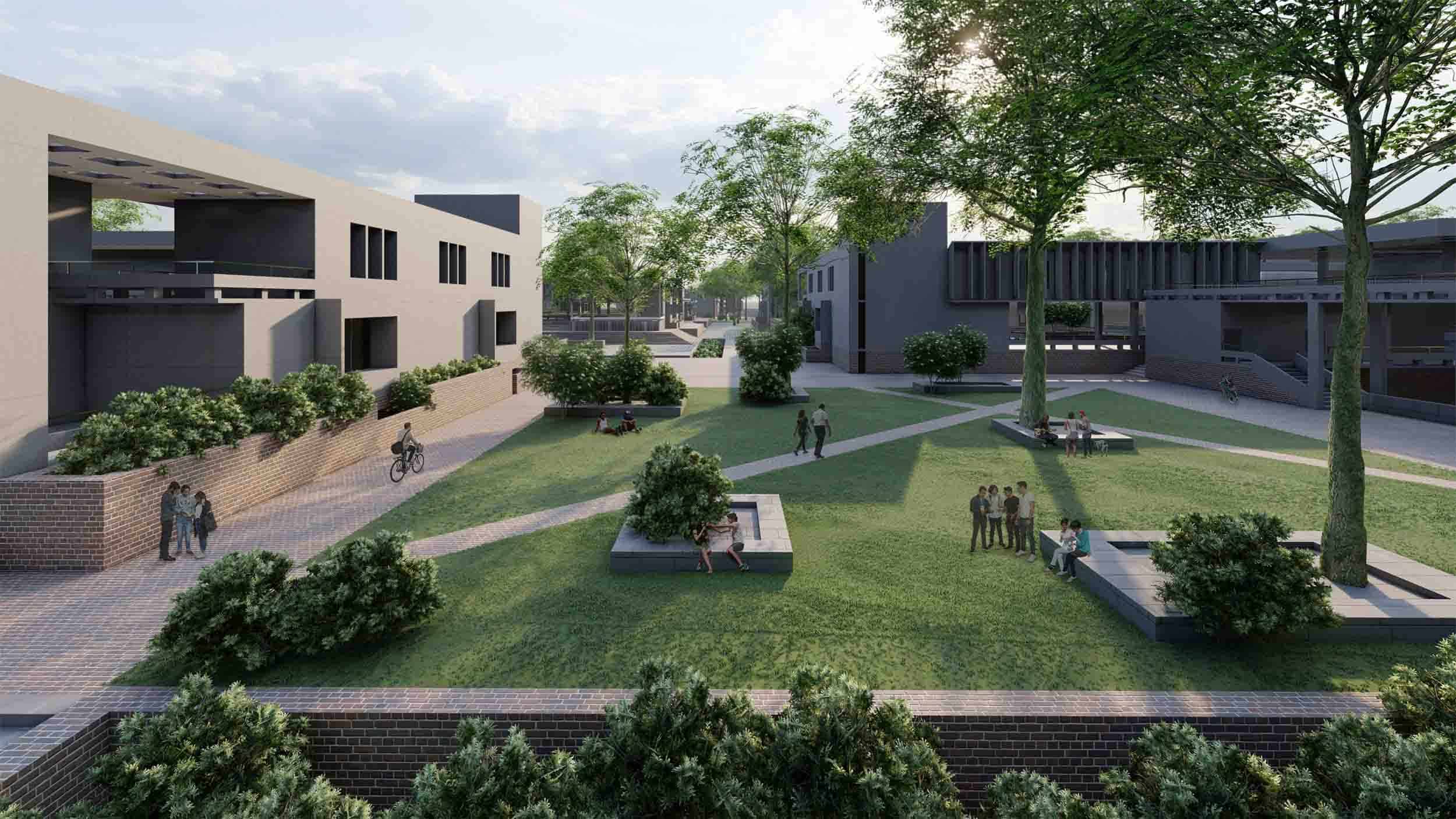
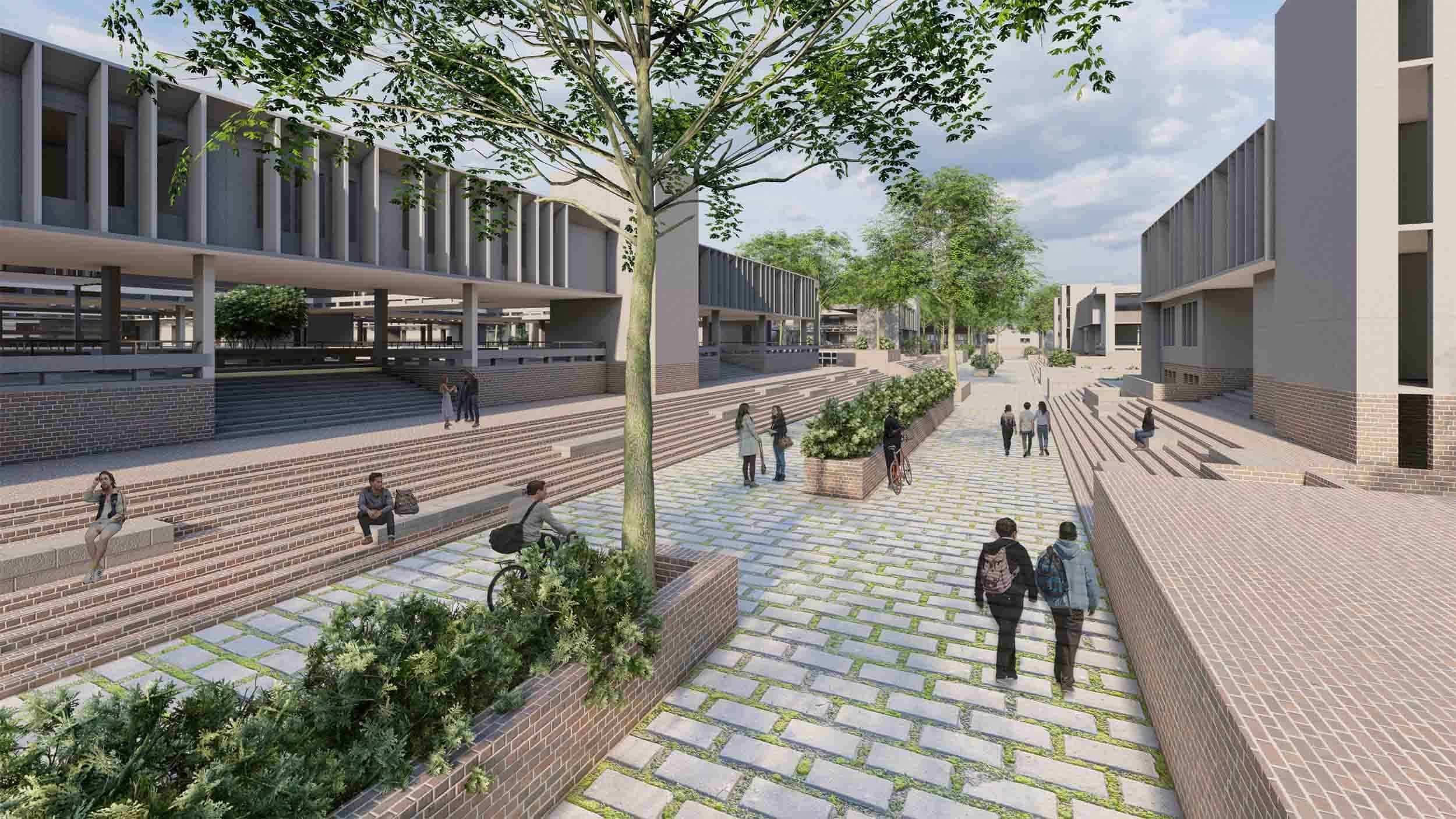
Entrance plaza between the arts schools
The institutional character of a university campus is shaped by the nature and use of its programmed and non-programmed spaces. These relationships have been structured into a network of social (informal) and academic (formal) meeting spaces. The academic and the social spaces have been woven into a seamless fabric with an emphasis on fostering collaborative working between students and faculty across departmental boundaries.
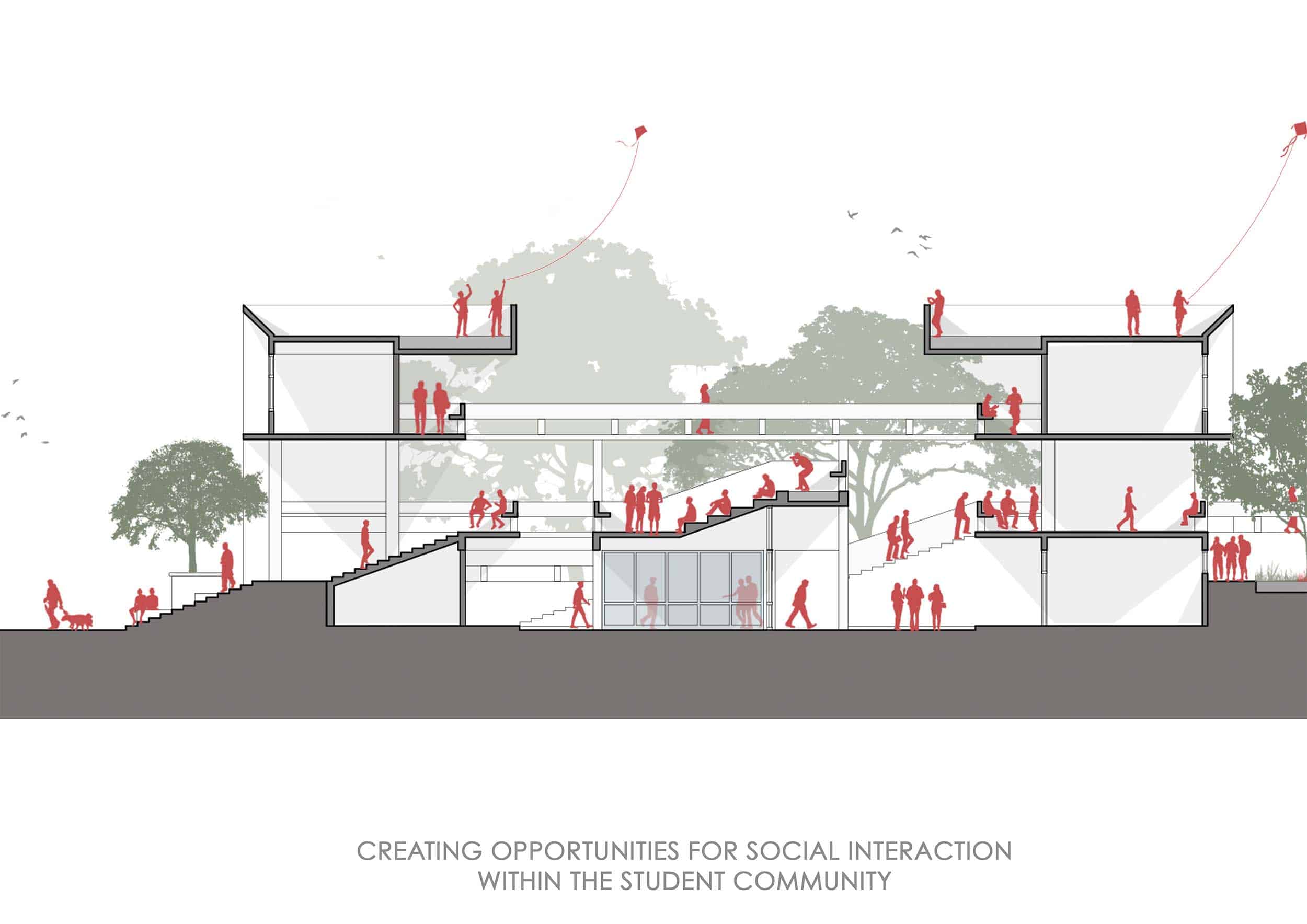
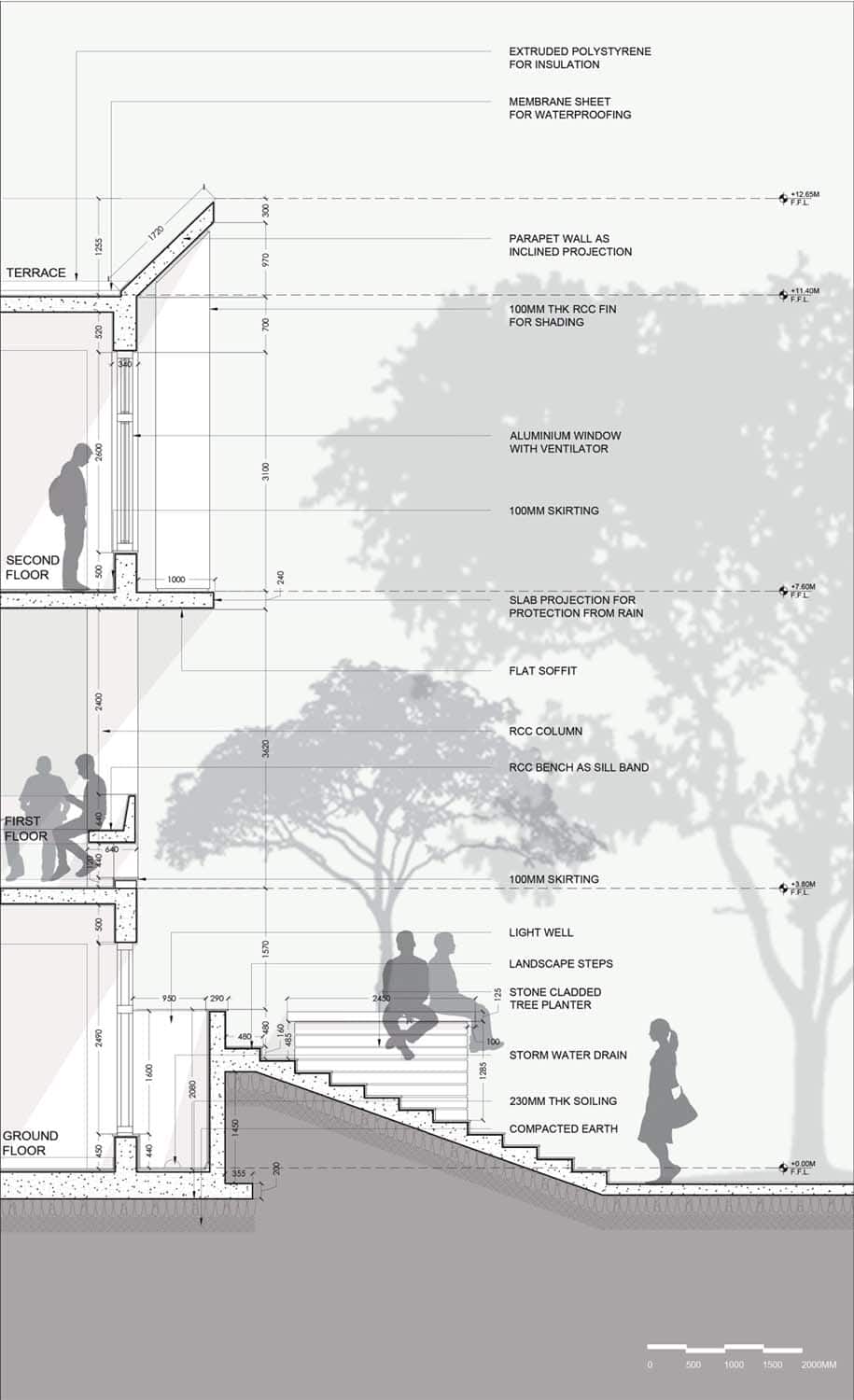
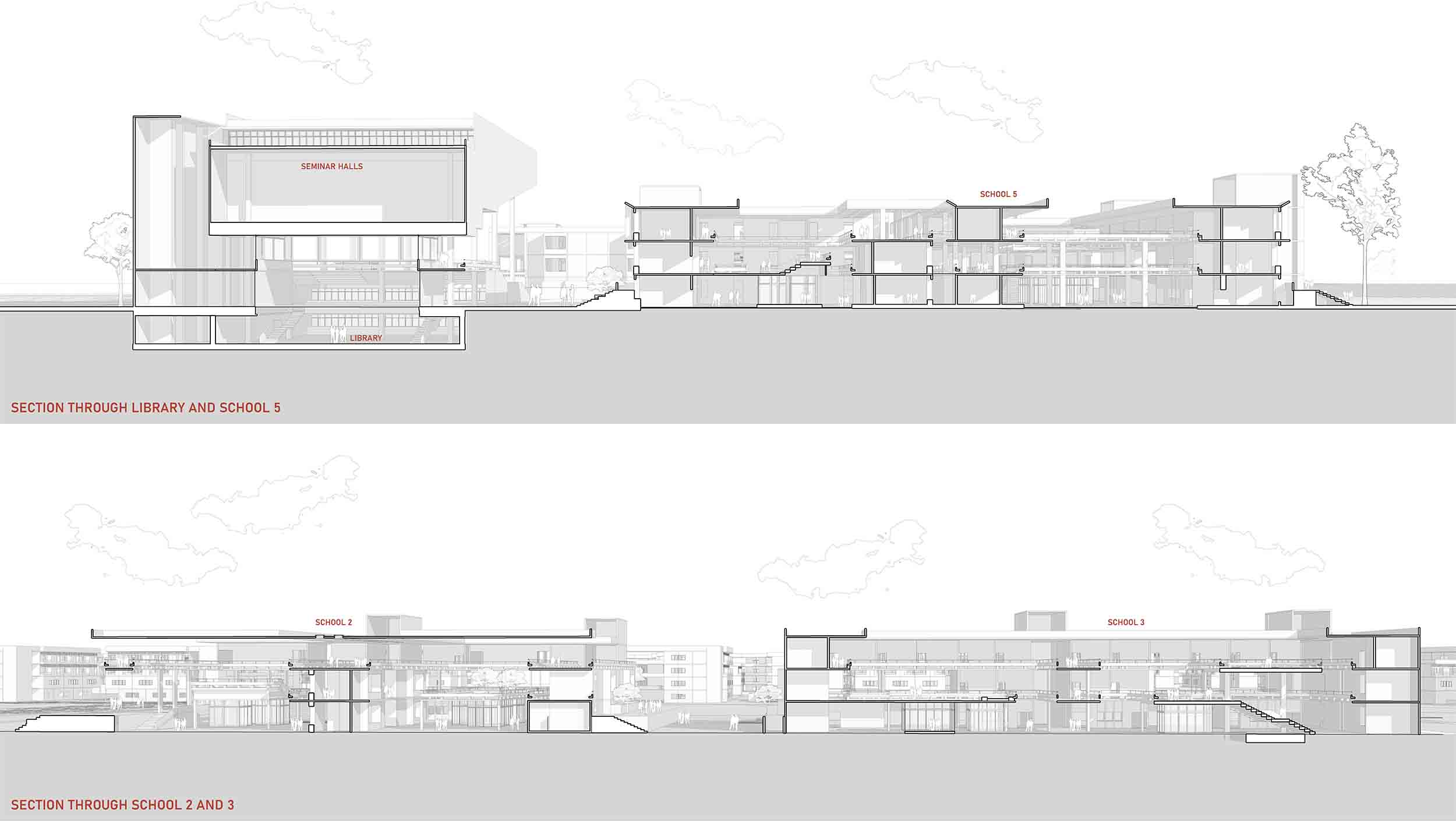
Each of the seven schools are fragmented into three and four courtyards that are centered with meeting spaces for academic discussions with a layer above to allow for informal social interactions between students and faculty. These informal spaces are imagined as ‘floating landscapes gardens’ that are connected via a manifold of ‘raised Plinths’ that are networked together with spanning bridges and framed corridors. These ‘raised Plinths’ unify the schools as a whole and contrastingly the courtyards dissolve the hermetic nature of each school.
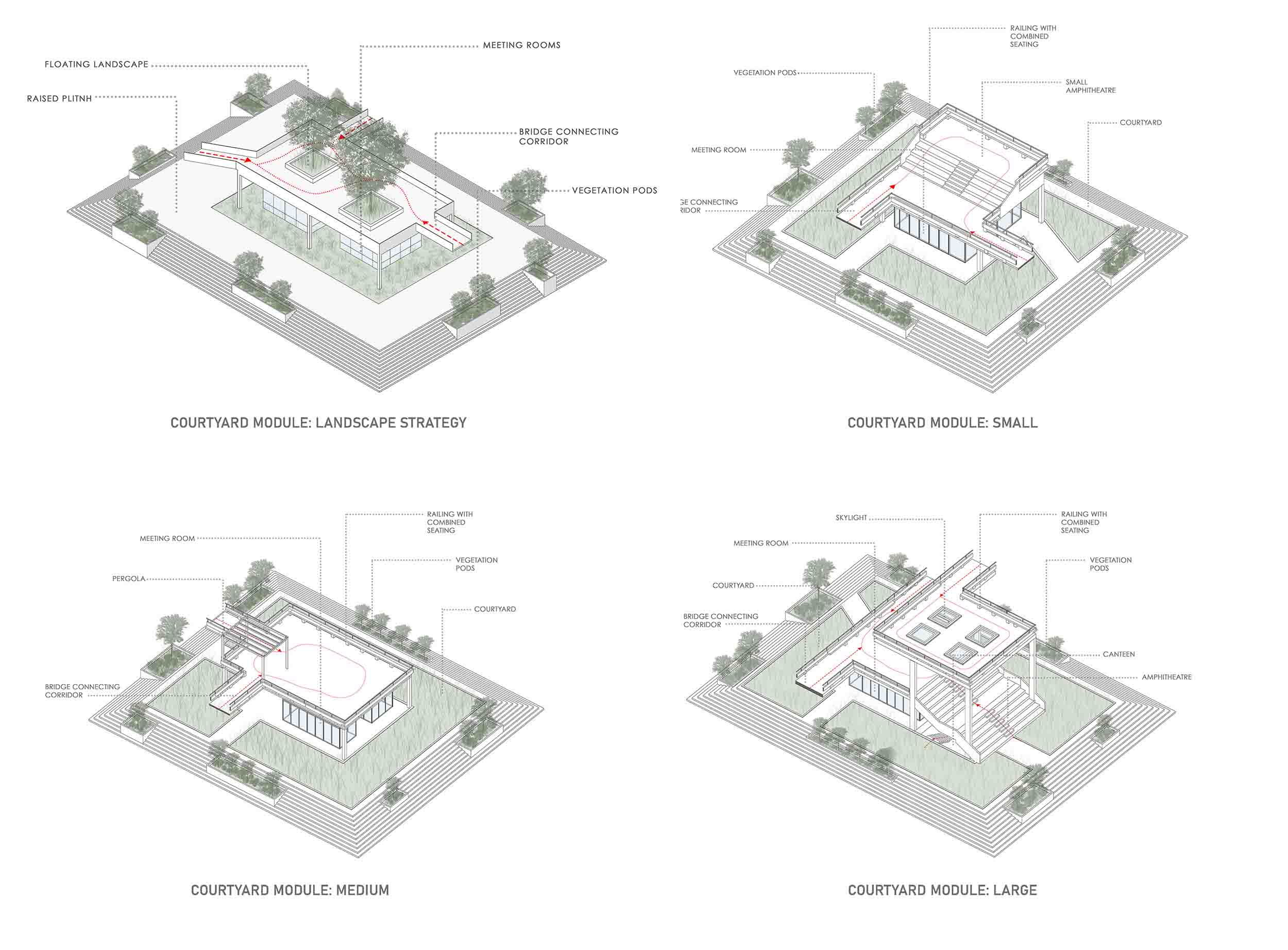
The courtyards are scaled to enhance human interaction and foster communication. The raised plinths allow for movement and chanced interactions between students and faculty members thus increasing the effective collaborative research at the institute.
In the academic zone the schools have been clustered based on a broad classification of the Arts and humanities departments being placed together and the science departments also have been placed in close proximity to each other. This would encourage students to engage with the curriculum of the adjacent school and allow students to build bonds with students and faculty of the neighboring schools, which in turn creates a fertile breeding ground for innovation and research collaborations.
CREATION OF A UNIQUE CAMPUS CULTURE
The campus design creates several conditions for students to explore multiple forms of expression. Annual festivals, academic summits, conferences and other cultural events could be accommodated at the varying scales of amphitheaters and stepped plazas. Each of these platforms are interconnected through movement for ease in navigation and access.
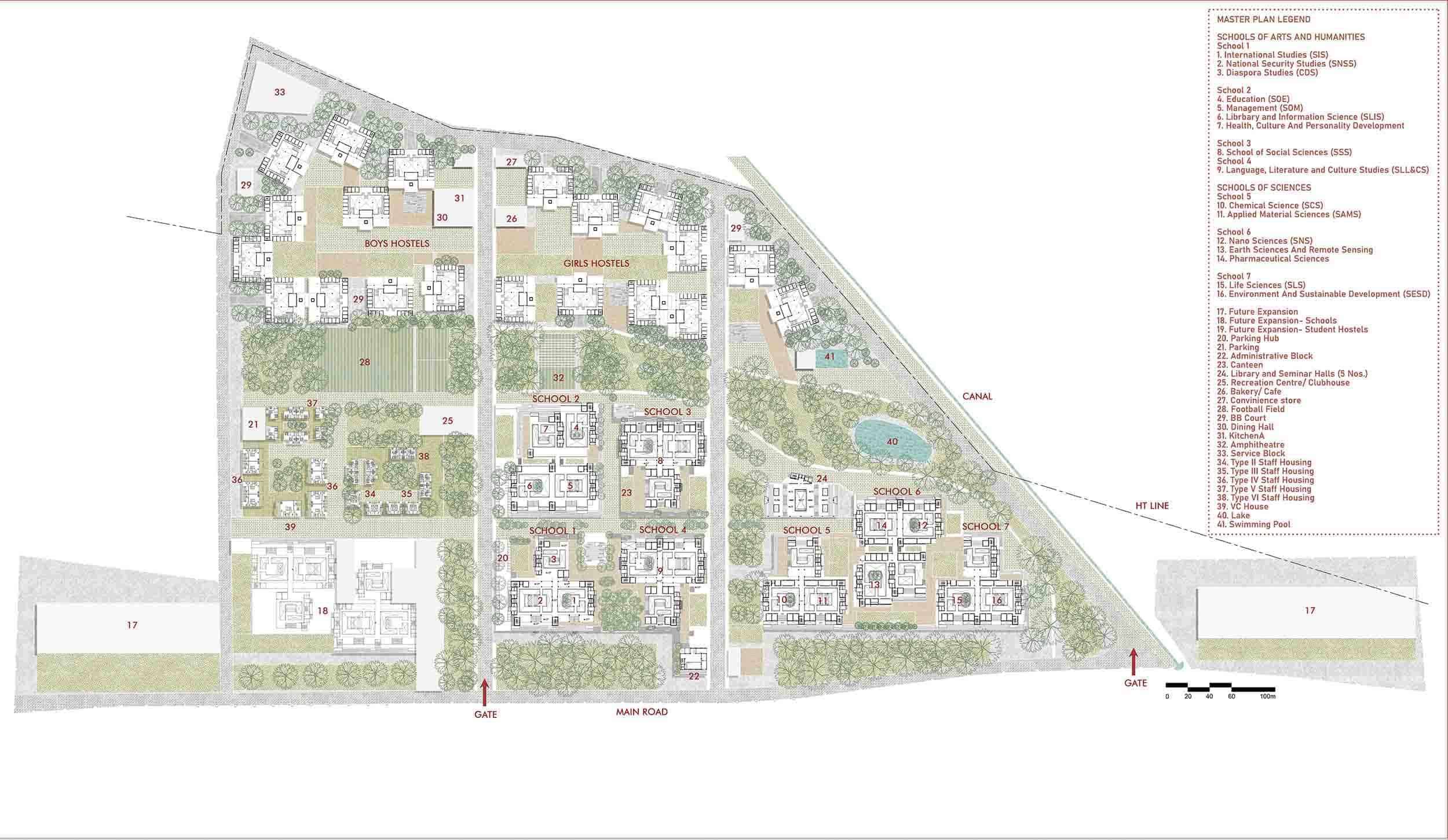
MASTER PLAN
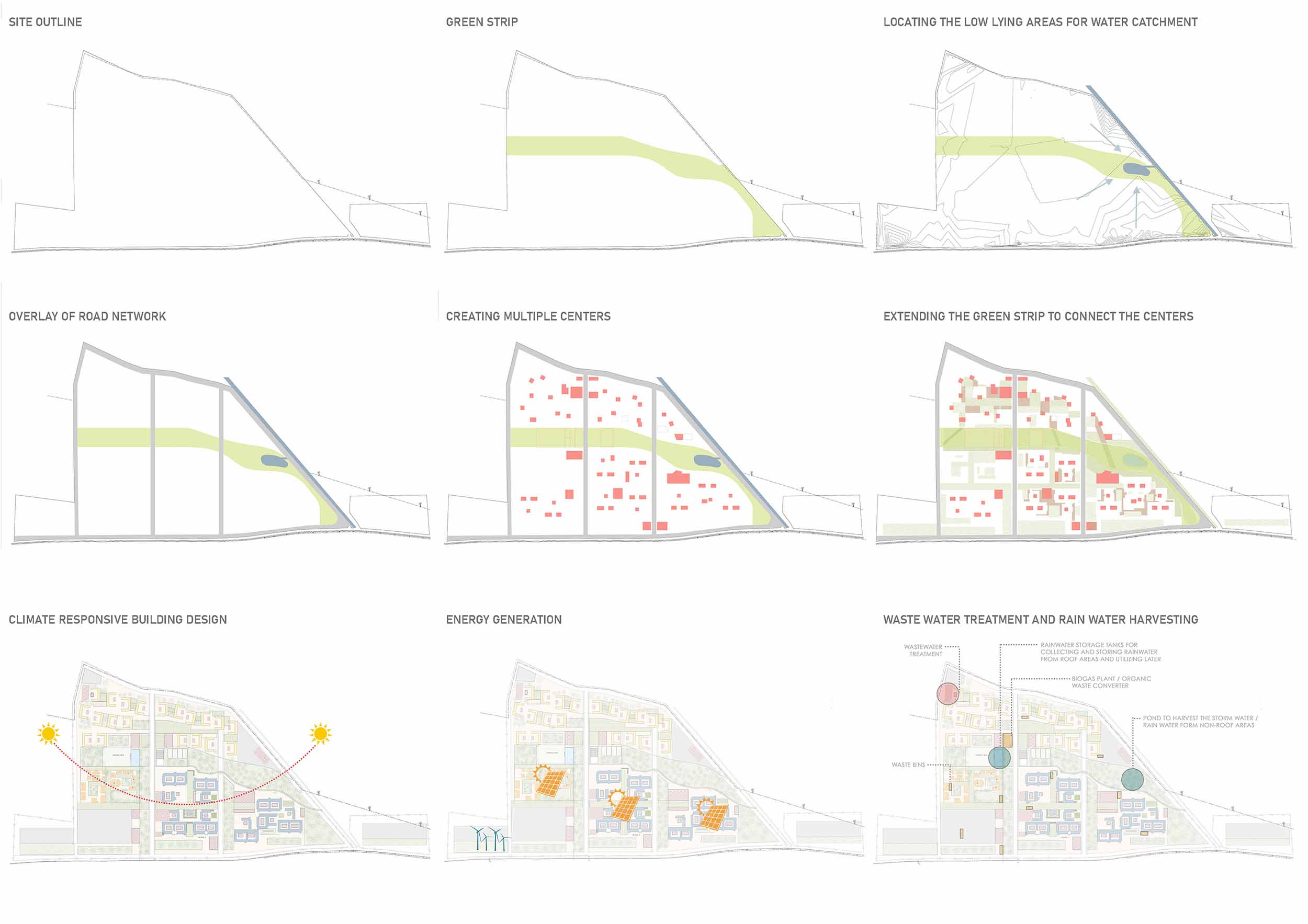
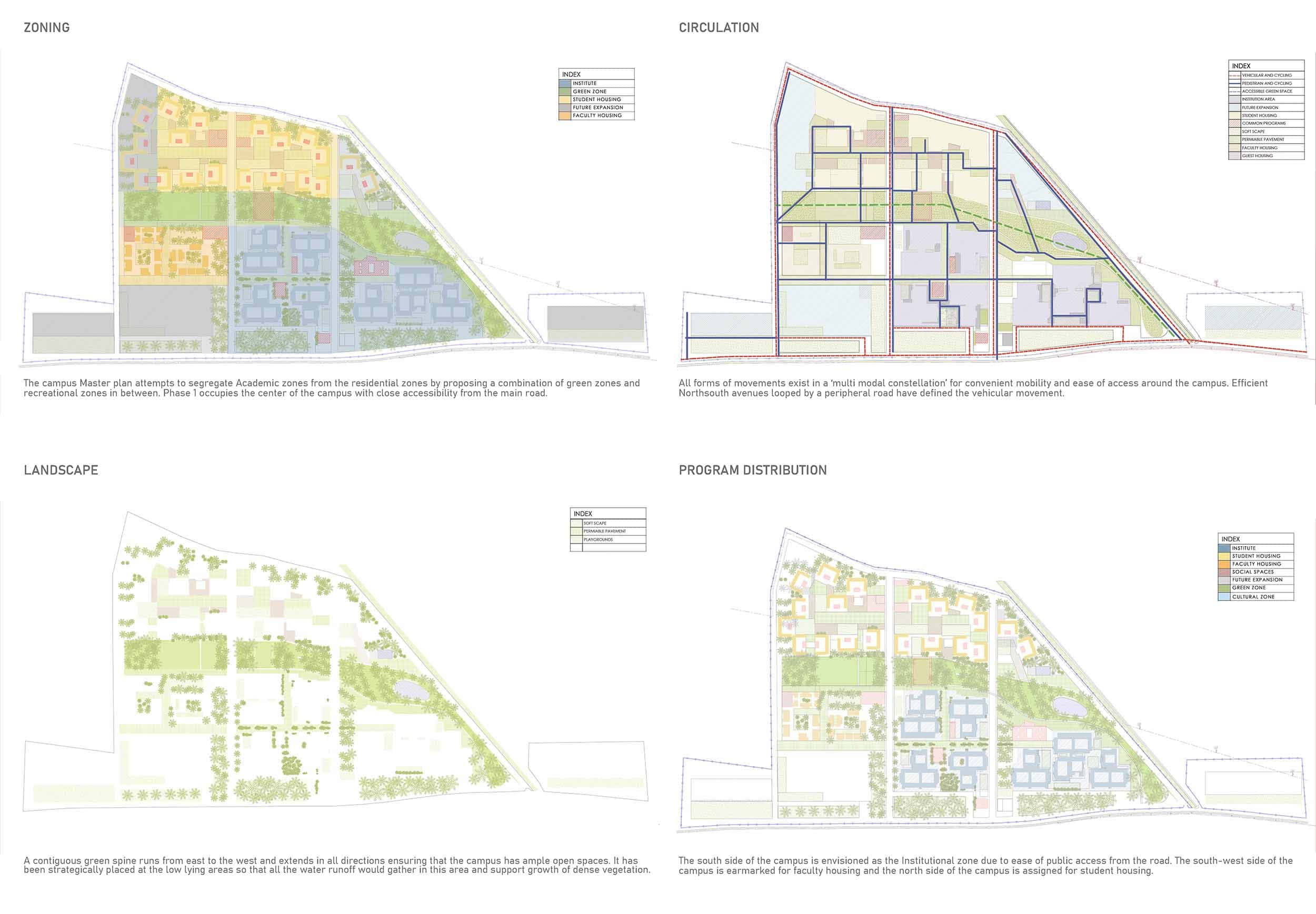
The campus Master plan attempts to segregate Academic zones from the residential zones by proposing a combination of green zones and recreational zones. This forms the broad division of the entire campus into the north side and south side. The south side of the campus is envisioned as the Institutional zone due to its proximity and ease of public access from the road. The south-west side of the campus is earmarked for faculty housing and the north side of the campus is assigned for student housing. This allows for privacy to all housing programs. The Housing forms the second layer of the Master Plan, of which the student housing has been set into a more active zone by positioning the dining halls at equal proximity from the east and west ends of the housing. ‘Common Program’ and open recreational activities have been buffered between the Girls and the Boys housing.
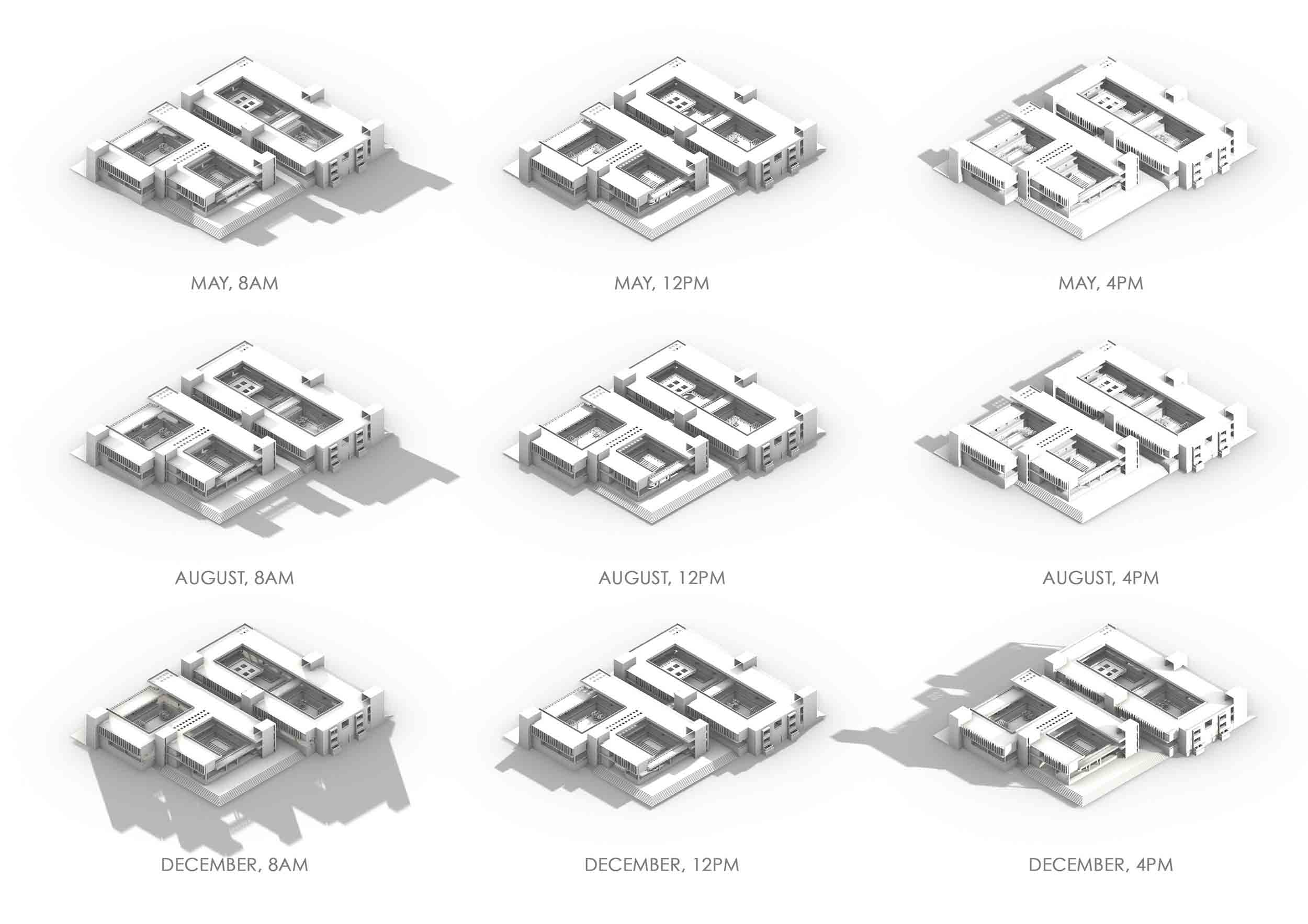
The Faculty housing is set on the southwest of the campus to allow for a higher degree of privacy for the families. The housing is envisioned as a community that fosters exchange between families. Open spaces with varying proportions allow for safe space for children’s outdoor activities. To ensure this, a ‘parking Cul-de-sac’ has been kept on the rear side towards the western road. The faculty has been provided with easy pedestrian access by extending the ‘student Avenue’ emerging out of the heart of the institute. The housing units have been organized with light courts that bring in filtered light to reduce the heat that gets trapped from sunlight coming through window glazing.
The academic departments and schools have been designed to foster cross-disciplinary exchange with dynamic movement across buildings and their respective courts.
GREEN SPINE
A contiguous green spine ensures that the campus would have ample open spaces without any building activity or functional programs. Cultural and recreational programs have been strung to the periphery of the green zone to provide an engagement of student activities in conjunction with open spaces that need a clear definition and soft protection. Movement has been made seamless with inclusion of ramps at all barriers and thresholds of the site and buildings.
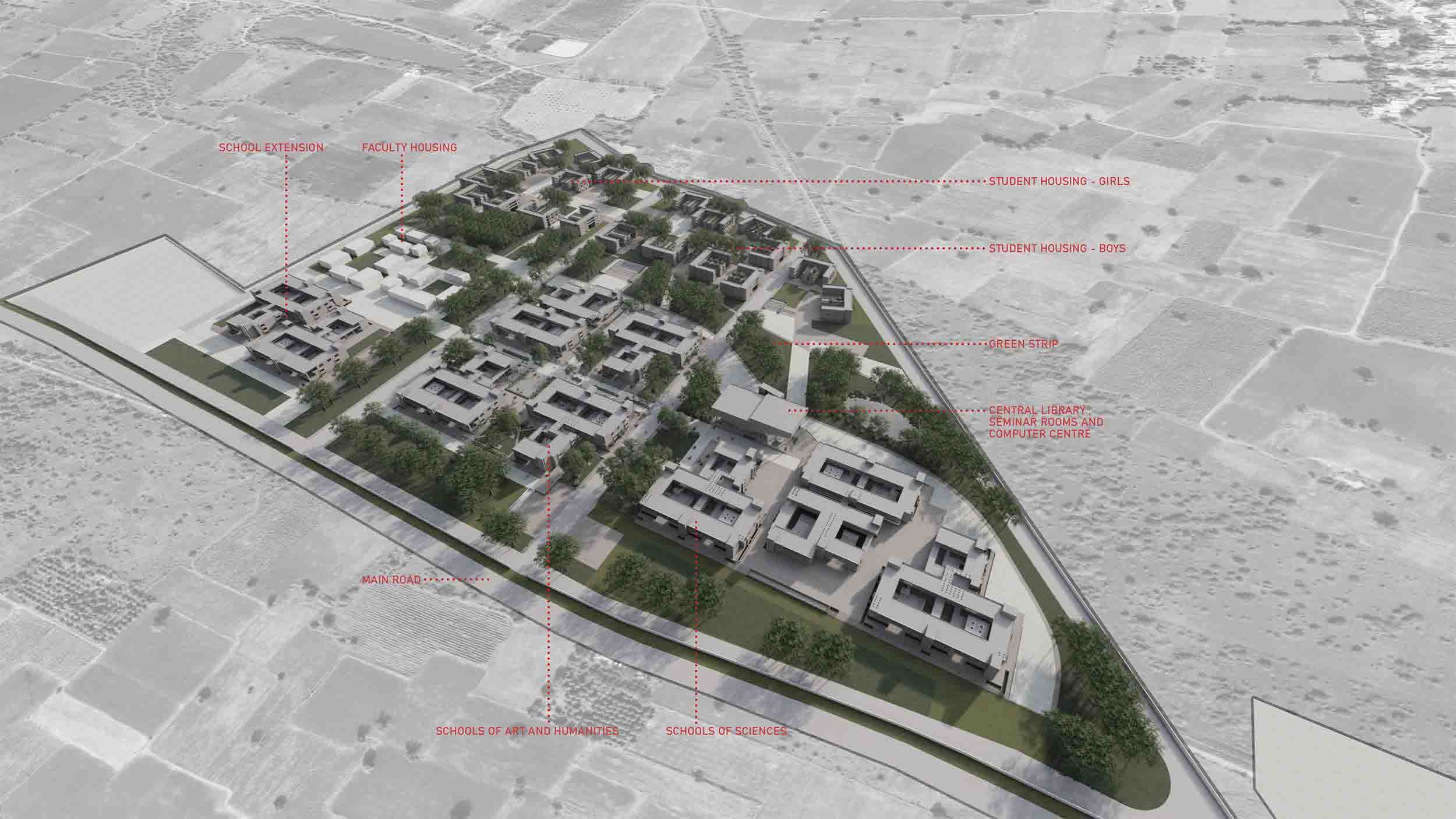
The green spine runs from the east towards the west. It’s been strategically placed at the lowermost level of the site with the thought that all the water runoff of the site would gather in this area and would support growth of dense vegetation. The dense vegetation and dampness of the soil would provide a higher level of humidity that would provide comfort to the neighboring built environment. Planting trees of local and native spices would ensure that the minimum water is required for irrigation and would ensure lower gardening upkeep. The introduction of a ‘green spine’ would be a welcome invitation for a Variety of regional birds. A semi soft pedestrian loop along the periphery of the ‘green spine’ would encourage walkers and joggers for recreational use.
Gallery