
Institutional | Master Planning | Competition
IIT Bombay Master Plan | Institutional Campus Design Competition
Networked campus…. Building a scenario for the campus
Institutions cannot operate like islands within a campus, as they are places of exchange of ideas, thought processes and findings. The post modern institution is designed with opportunities for multiple affiliations and partnerships as there is a need for strategic alliances.
Partnerships today, both local and global, are a part of various physical and virtual networks. Campuses attract informal, unplanned alliances which in turn alters the planned space and time.
The tradition of disseminating knowledge and innovation relies on the diverse community experience. This interdependence of a community and the individual is vital for the growth of an educational institution. Focusing on the diversity of individuals and the vastness of a community creates opportunities of variation and thereby learning. Interdependent programs offer a multitude of interactive spaces that would be beneficial for a community experience.
Exterior view of the campus
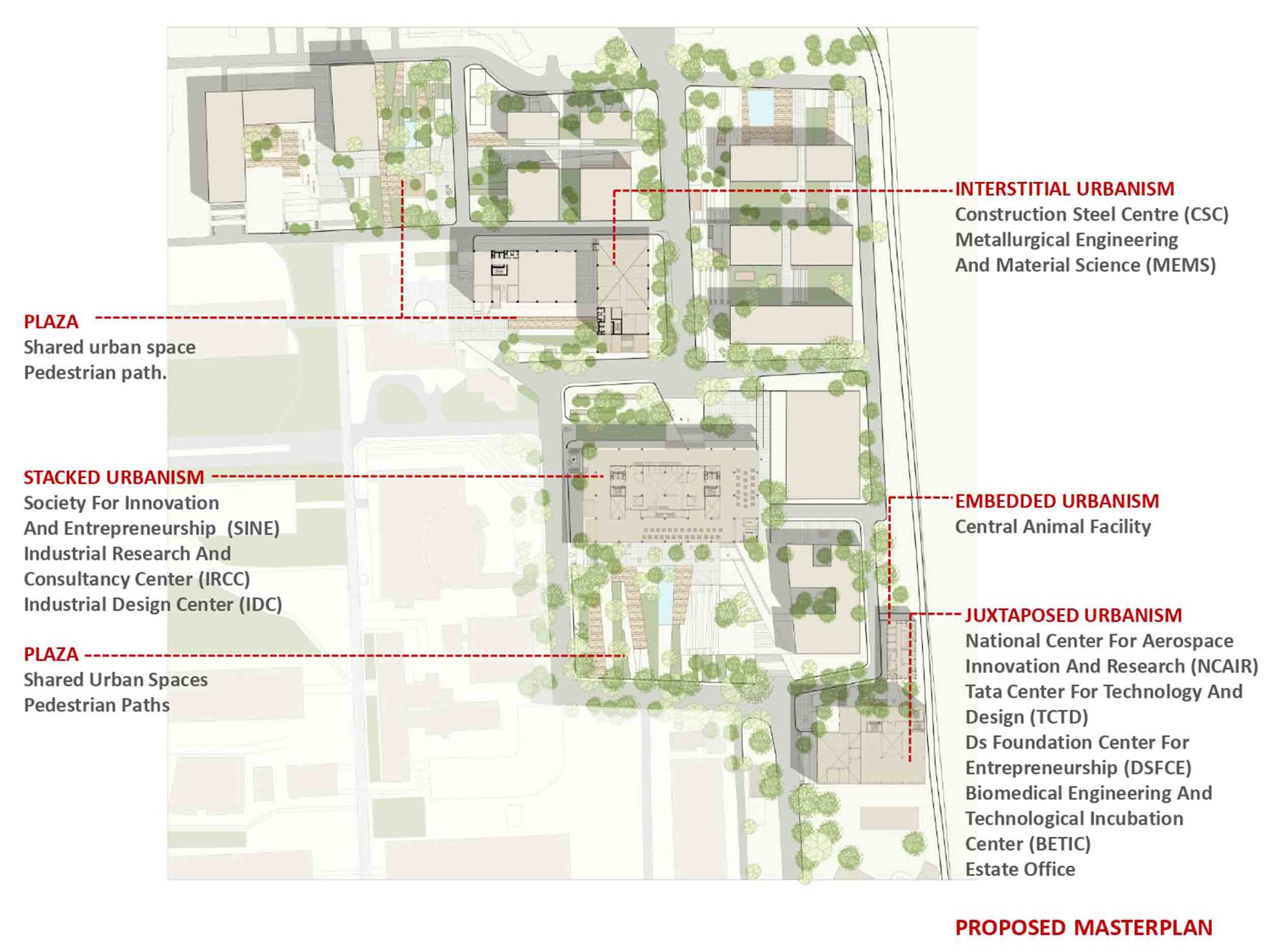
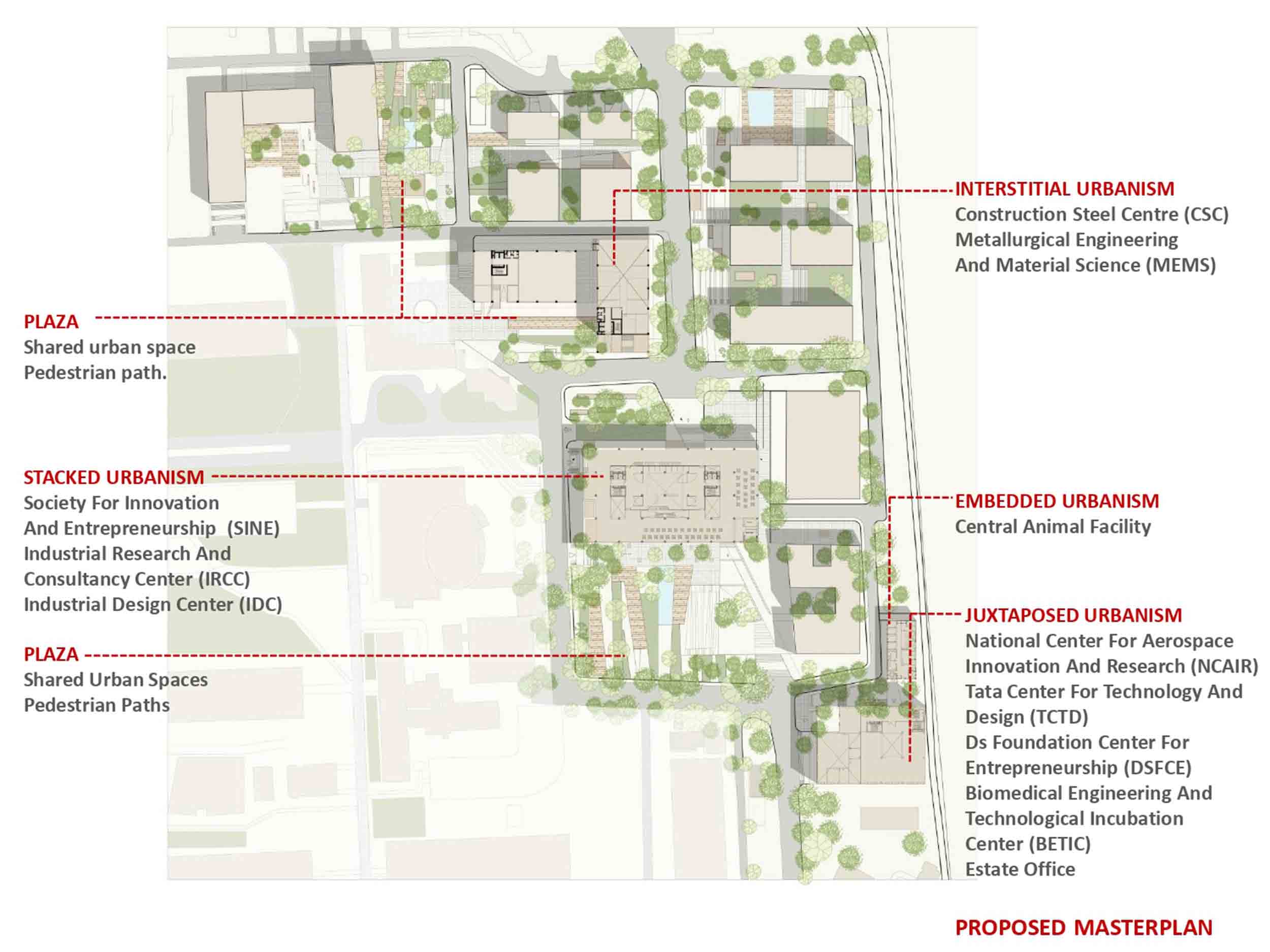
Relationship of buildings to the master plan.
The IIT Bombay campus buildings presently exist as islands that are surrounded by landscape. However in a contemporary scenario the various departments are interdependent and share both exchange of ideas/information and resources. This creates an opportunity for a new strategy of design which is a networked approach.
We have proposed a constellation of deep plan buildings with higher densities. The buildings establish deliberate connections through hard and soft landscape areas.
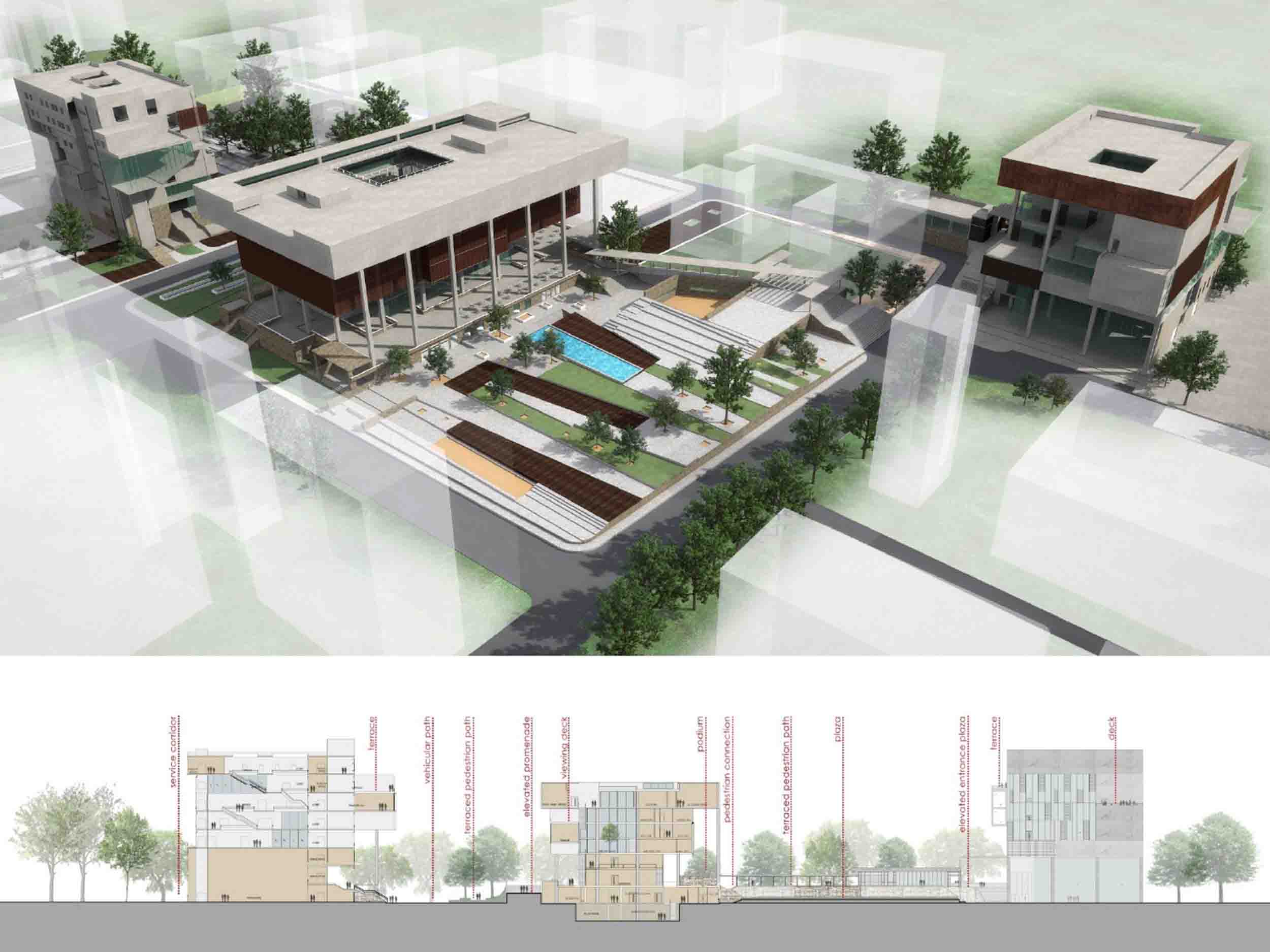
The Master plan attempts to make the campus an institutional center/ hub in the city of Mumbai. The institutional buildings become platforms for debate, exchange and dissemination. The SINE/IDC/IRCC building is an interface to the constellation of buildings in the proposed master plan of the IITB campus. It allows for mediating, filtering and channelizing people from public activity level to the semi-public programs.
The master plan supports the creation of networks of strategic open space such as green chains and green corridors through the existing site green cover. This seamless hierarchy allows for buildings to expand and contract through different times of the day and change of activities during different seasons of the year.
The experience of the master plan is an active pedestrian ground in which the streetscape gets transformed into stepped terraces and gentle ramps. The master plan breaks the strict definitions of the boundaries and layers by fragmenting the block program by streets, terraces, podiums and other common landscaped programs. Though the grain has been maintained by dismantling the defined boundaries of each institute within a super block, these seamlessly merge by virtue of the spatial continuum and connective public spaces.
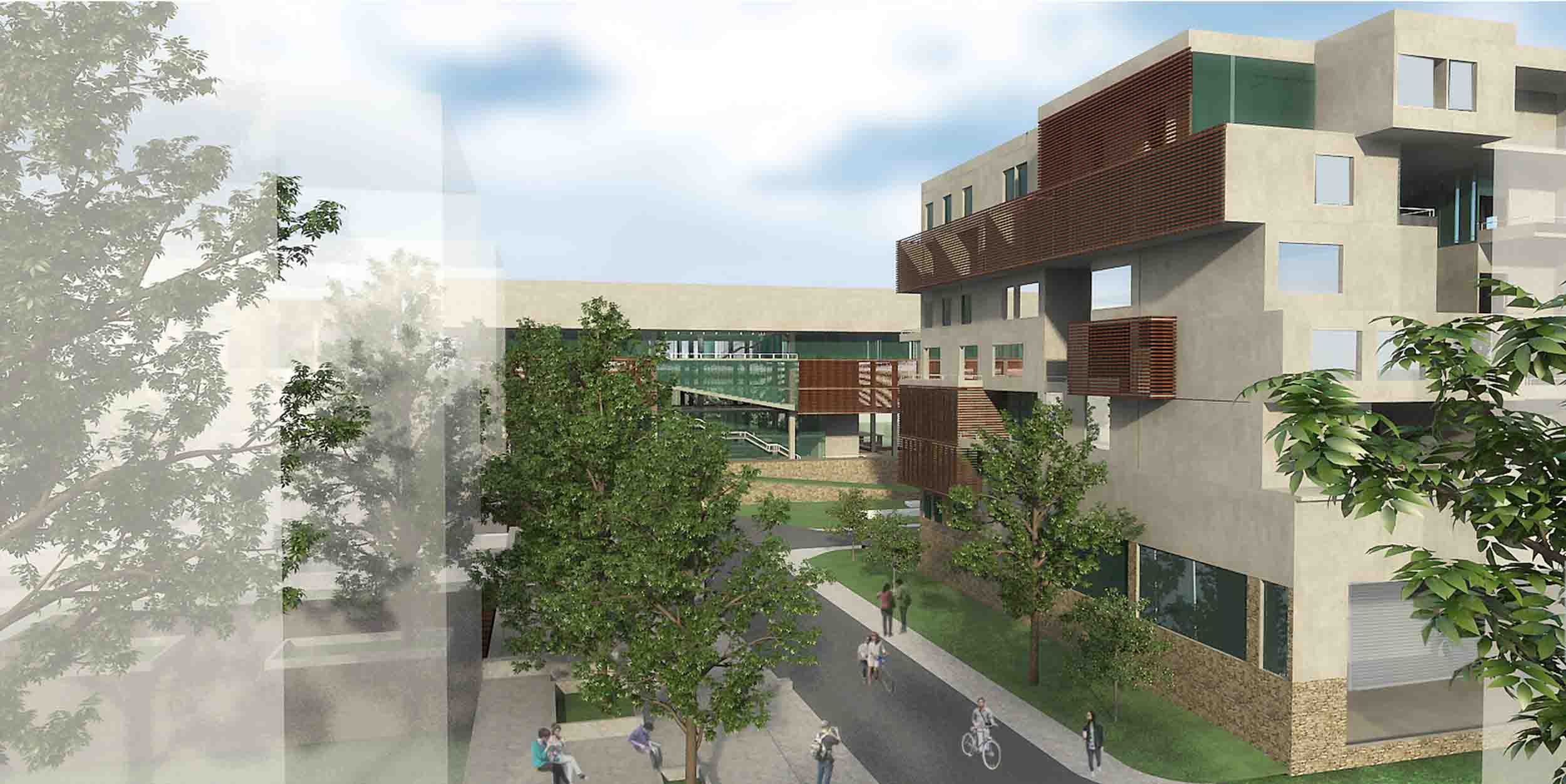
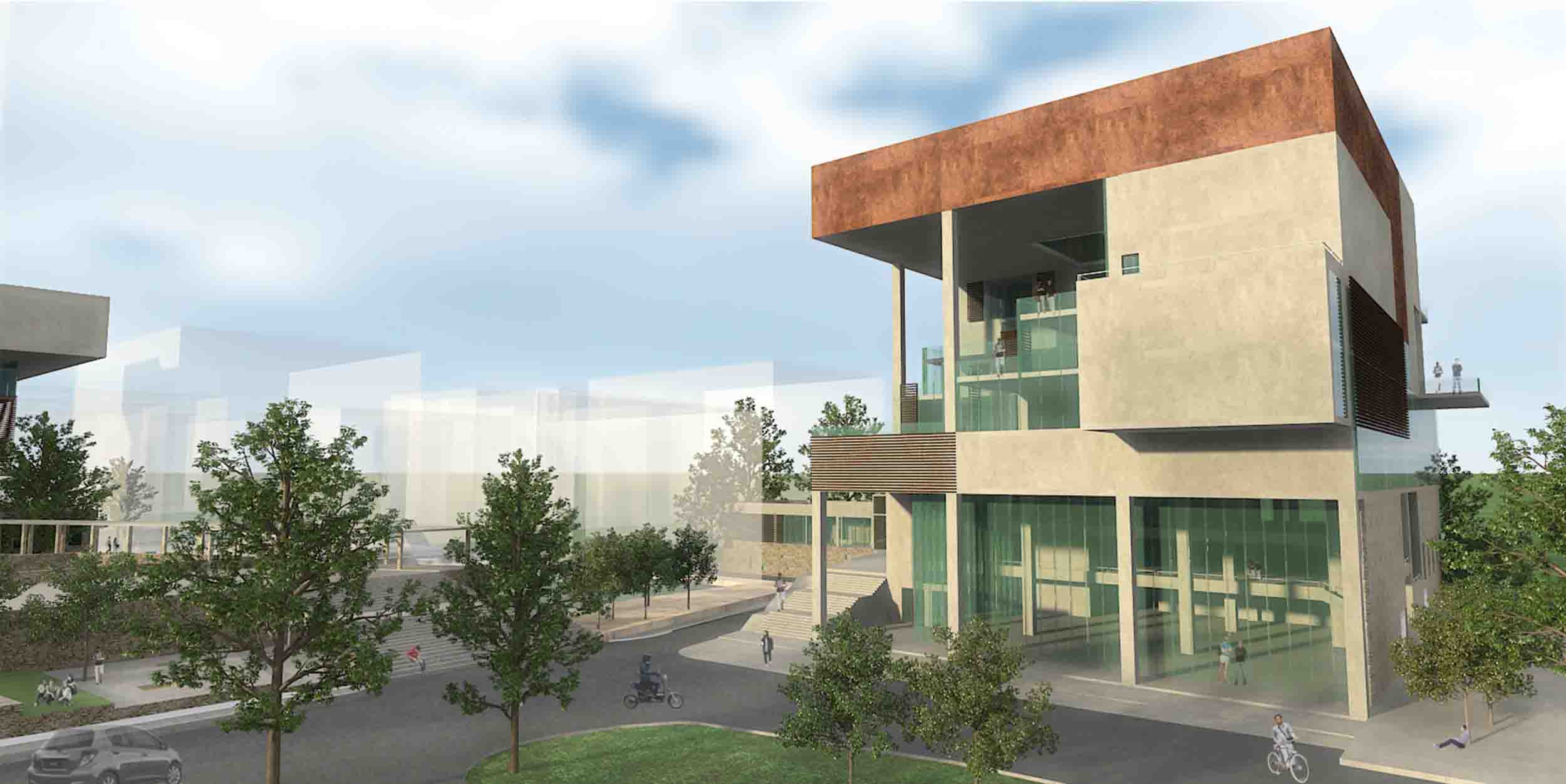
Street side view of the institution
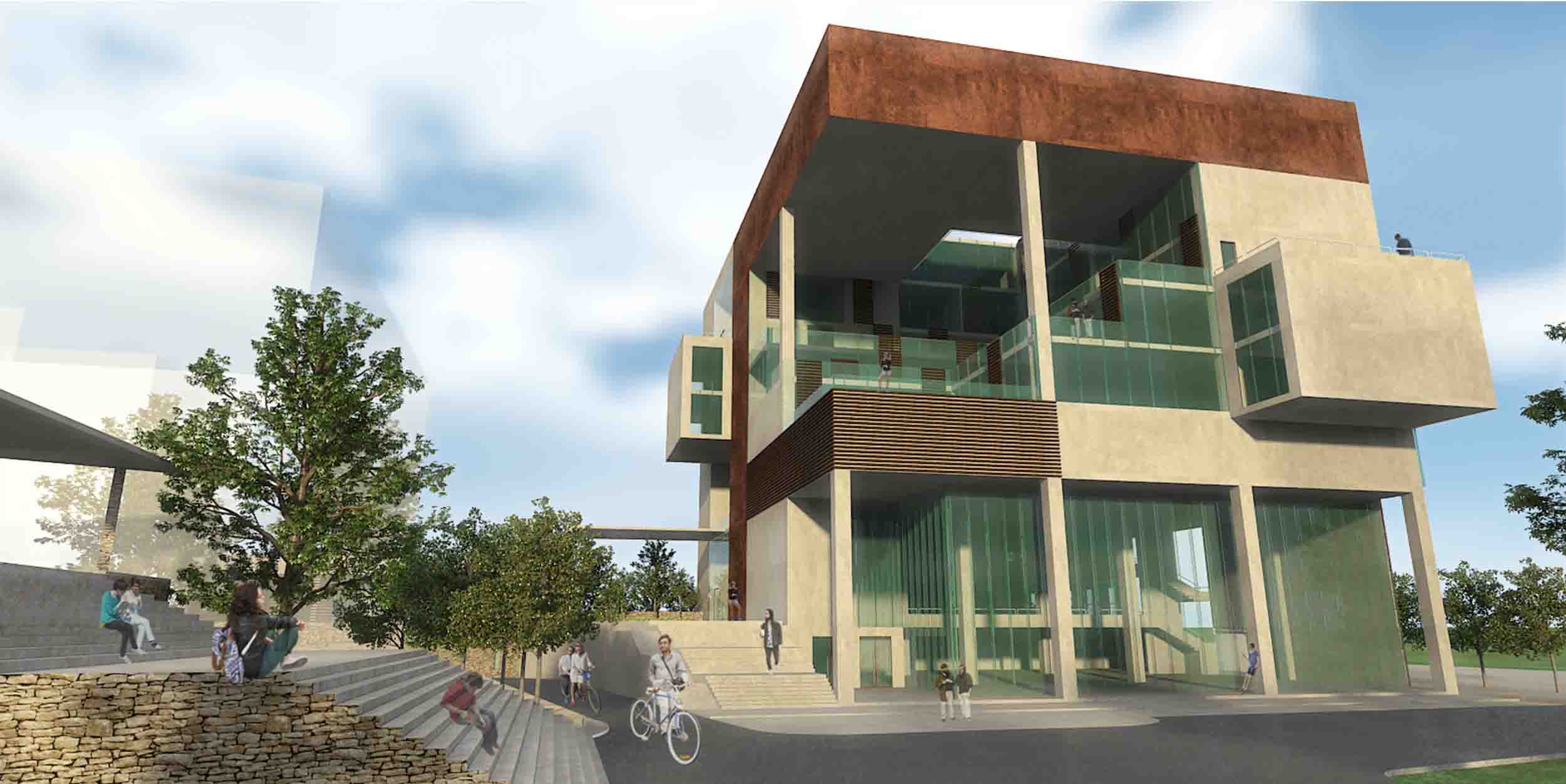
SINE/IDC/IRCC building
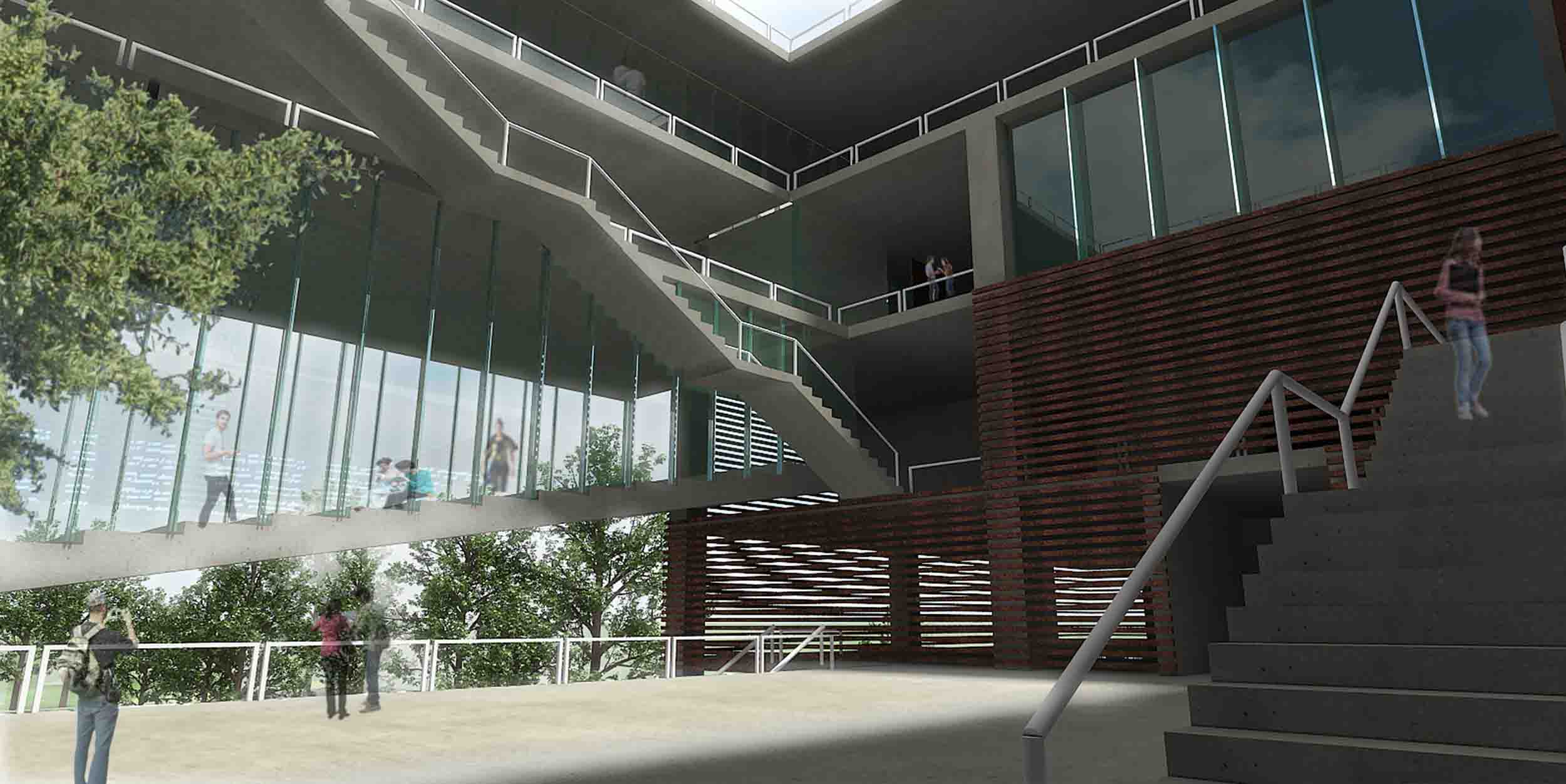
The structure is a three dimensional constellation that is informed by movement and varying levels of privacy of diverse programs. The central void in the SINE entrance is reminiscent of the traditional courtyard that anchors common public and community programs.
The Podium spaces serve as a pedagogical platform for the IIT Bombay to generate new interaction driven by the entrepreneurs, students’ and faculty’s ambitions and explorations.
Internally, the building is conceived as a vehicle to foster collaboration and cross-disciplinary dialogue among the different institutes with the stack. A sectional piazza—the central space for informal social, intellectual and creative exchange—forms the heart of the building.

Exterior view of I.D.E., S.I.N.E. & I.R.C.C. building
CONSTRUCTION STEEL CENTRE:
The steel center is a combination of workshops and learning spaces in the form of faculty offices and seminar rooms. Programs of these two categories have been stacked on each floor after identifying an ideal mix. The street sides (south and east) hold the learning spaces and the other two sides house the workshop spaces, which are adjacent to the service road of the building. A juxtaposition of voids on each floor has been used to segregate and organize the floors.
Voids in conjunction with open straight flight stairs increase the visual connectivity and physical connectivity of the stack. These voids and stairs allow for multiple possibilities of interaction and enhanced transparency of inter-related programs.
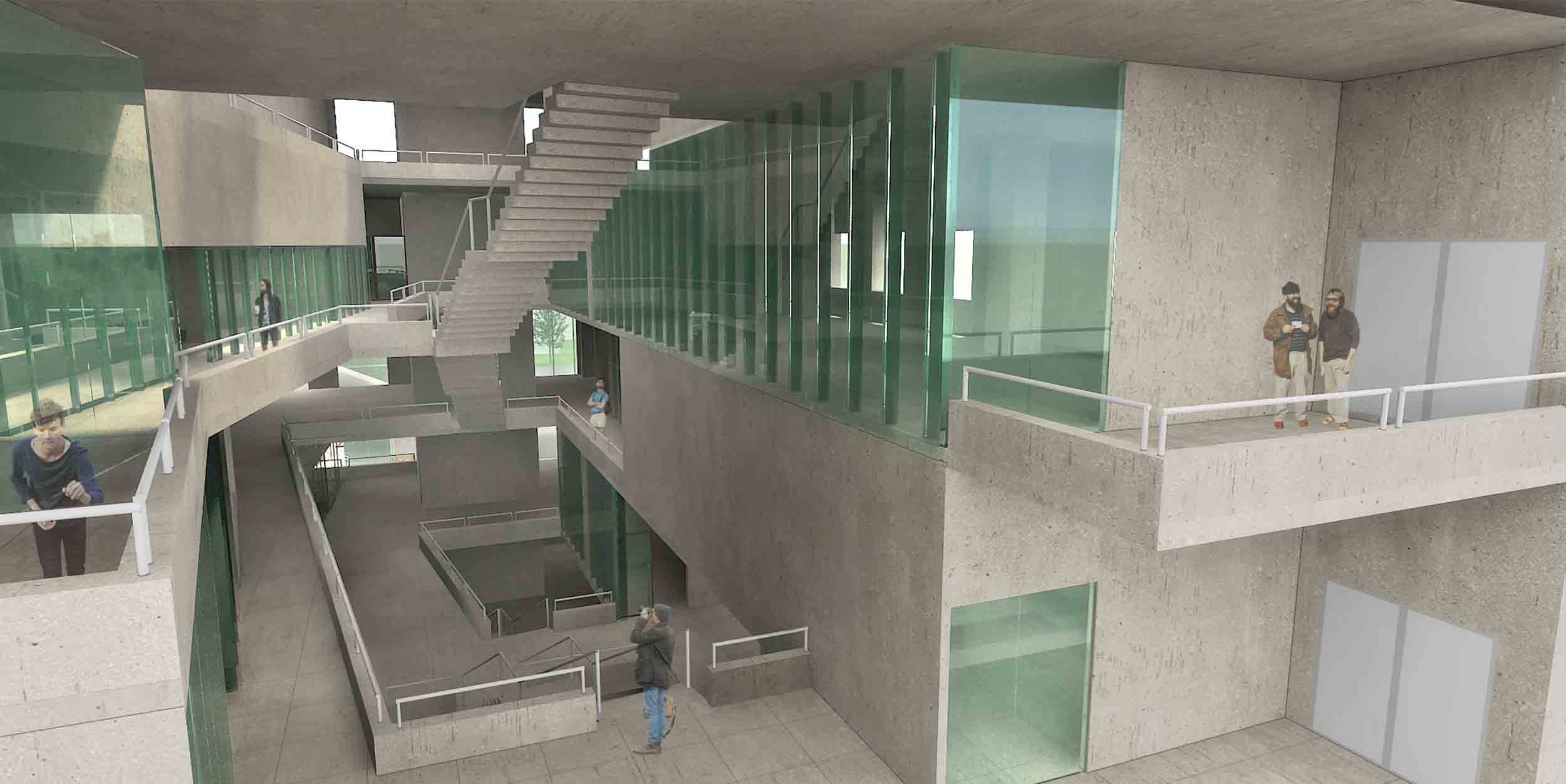
NCAIR/ ESTATE OFFICE / TCTD & DSFCE / BETIC.
As the building houses multifaceted programs a three-dimensional strategy of stacking has been adopted to allow for interdependence based on shared program and independence based on dedicated program areas.
The heavy loads have been placed in the lower section of the stack and the lighter loads have been elevated to the higher portion of the stack. A common stair core has been provided for shared and common movement with each institute having a dedicated access stair. Voids have been provided to interconnect with adjacent institutes with the intention of fostering exchange of ideas across each institute. The variable volumetric requirements of the programs have been expressed on to the façade of the building to break the overpowering scale of the building.
Gallery