
Residential | Master Planning | Competition
MBPT Staff Housing
Shifting Grounds
A catalyst for the future of the port area
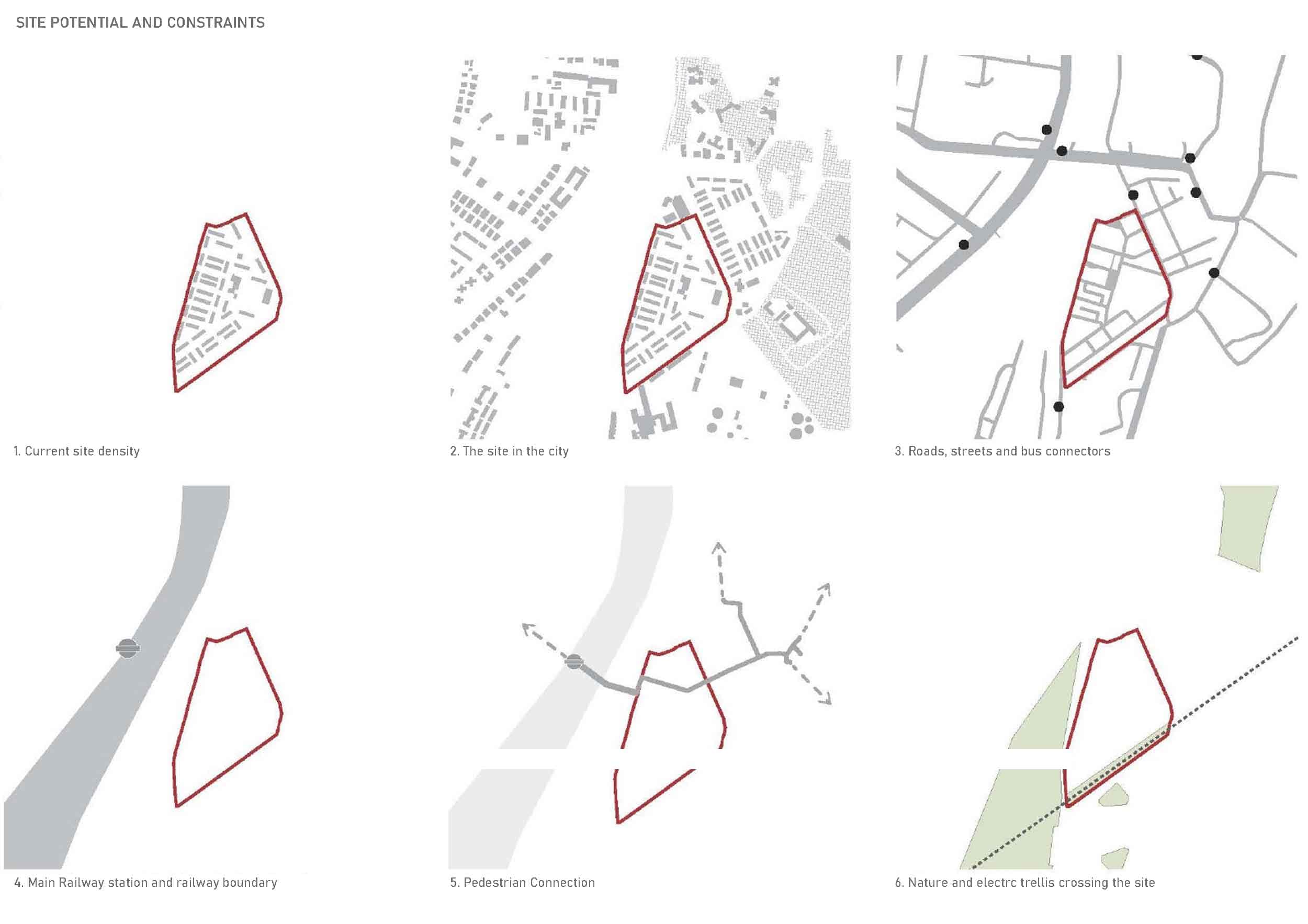
The 7 ha site of New Nadkarni Park at Wadala East is located at the northern end of Mumbai Port in South Mumbai. It is one of the first sites to be developed as part of the wider Eastern waterfront regeneration and is located east of Wadala station. The site is situated between many diverse urban conditions of varying densities:
Pedestrian flows and green areas
One of the main pedestrian connections between the neighbourhoods east of the site and Wadala station is a flyover bridge that crosses the northern part of the site. This enclosed bridge is crucial for the east-west movement of people across the railway lines. This flow of people crossing the site is a key consideration that informed our proposals from the outset. The incorporation of the route into any masterplan idea is essential for the creation of a coherent and well-integrated neighbourhood at New Nadkarni Park.
The green areas near and north of the hospital suggest that a green connection could form the basis of a design concept that aims to link green areas south and north of the site. The urban design strategies developed in the report explore this concept further, and exemplify two different approaches on how such a green route could be integrated into the neighbourhood.
A strategy for different approaches
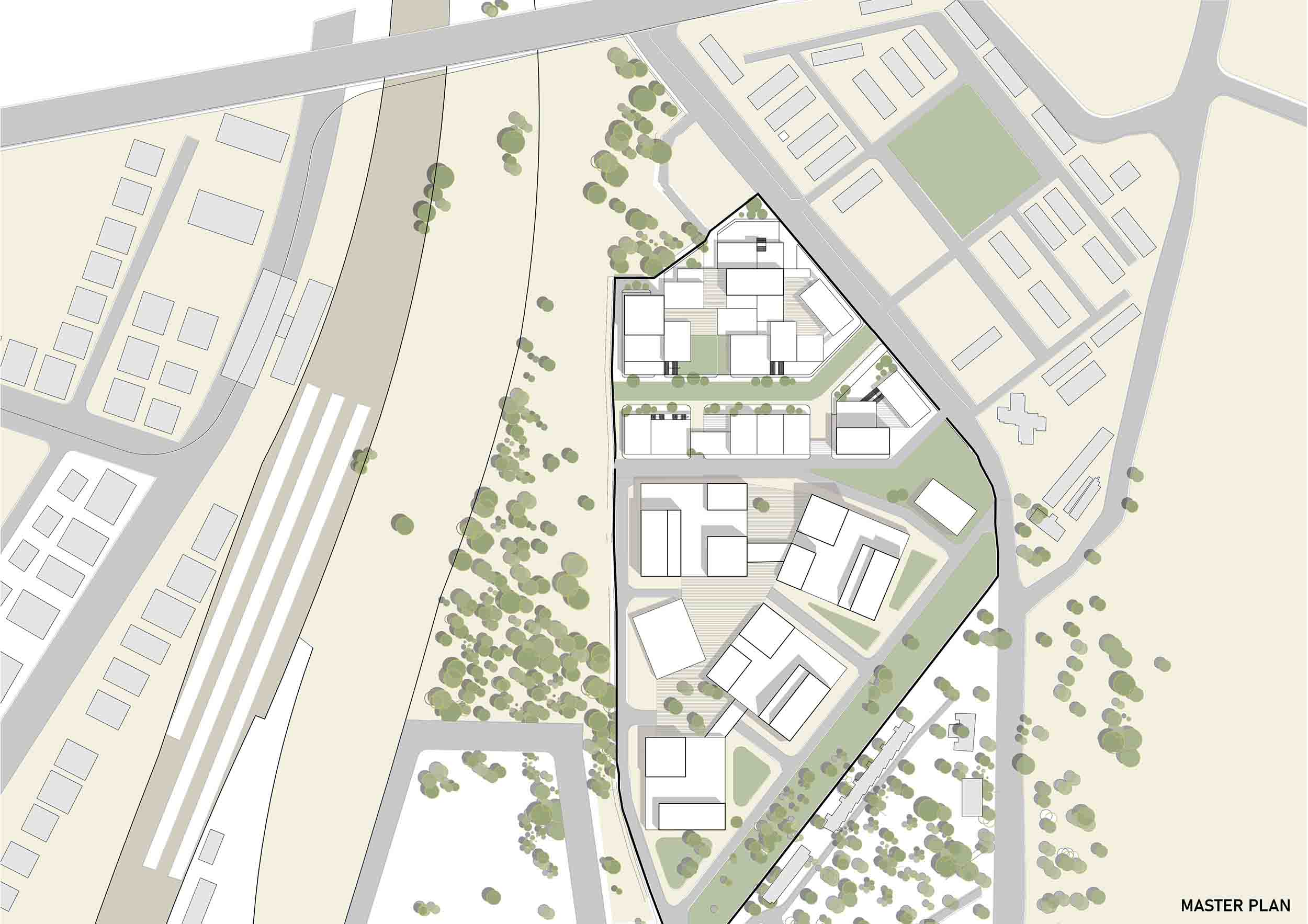
The conceptual design builds on our site analysis by incorporating the pedestrian flyover bridge into a green corridor that is linked to the southern green area by a north-south route. This route forms the central spine of the master plan and functions as a shared, open space incorporating non-residential uses, public services, as well as vehicular movement. Several routes feed into it, in turn creating the development plots.
These conceptual principles form the basis of our master plan design and establish a flexible framework that can be adapted to suit a variety of project considerations, such as phasing, density, land uses, and movement strategies.
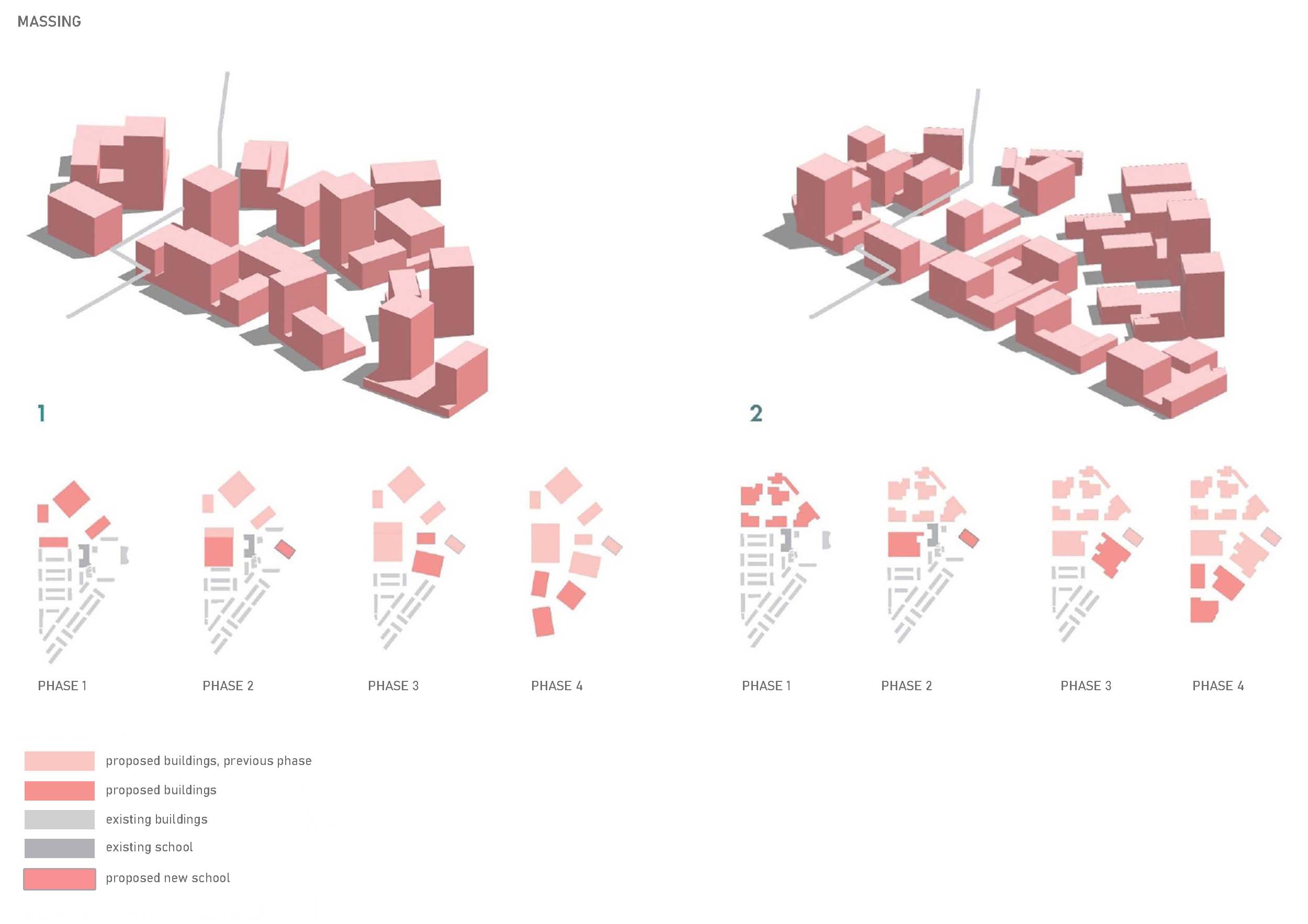
To illustrate this point, which is an essential element in the evolution of master plans that ensures their robustness to adapt to changing economic, political, and social conditions, we have developed two parallel approaches to the design of urban blocks in the following part of the report. The two approaches do not contradict each other; instead, they offer different interpretations of the same principles.
1. Simple buildings, complex spaces
One approach to developing our conceptual ideas into a master plan proposal is based on the idea that simple, rectangular buildings can be arranged to form complex spaces that add character and interest to the routes that cross our site.
Starting with the idea that the structuring element of the master plan, the east-west pedestrian route, is incorporated into a green, public park that opens the site and connects to the informal green areas around it. The north-south is expressed as a central paved space that leads to the green park and can accommodate both vehicular and pedestrian movement. Narrow streets connect to the roads surrounding the site and to the proposed building blocks.
2. Complex buildings, complex spaces
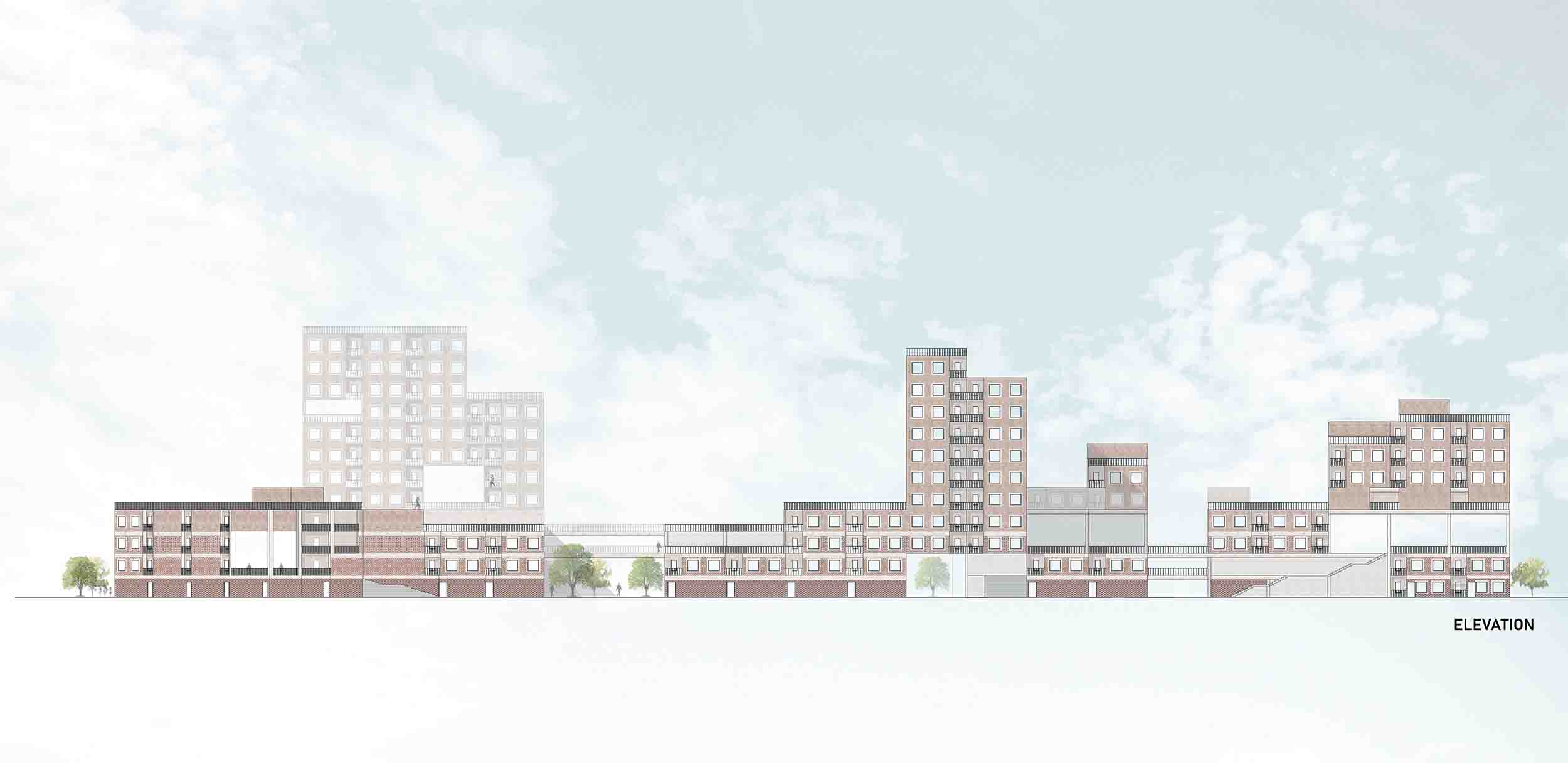
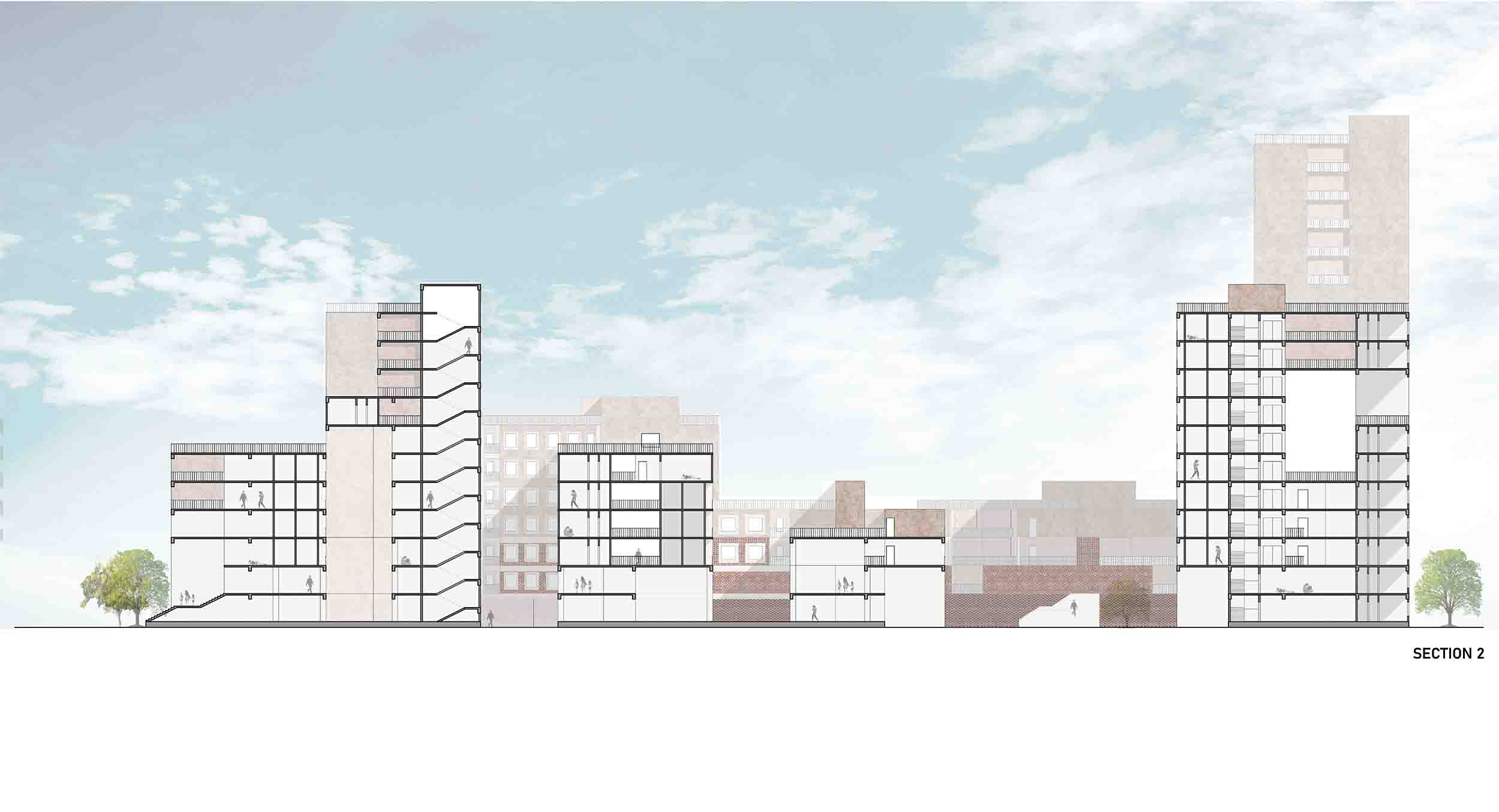
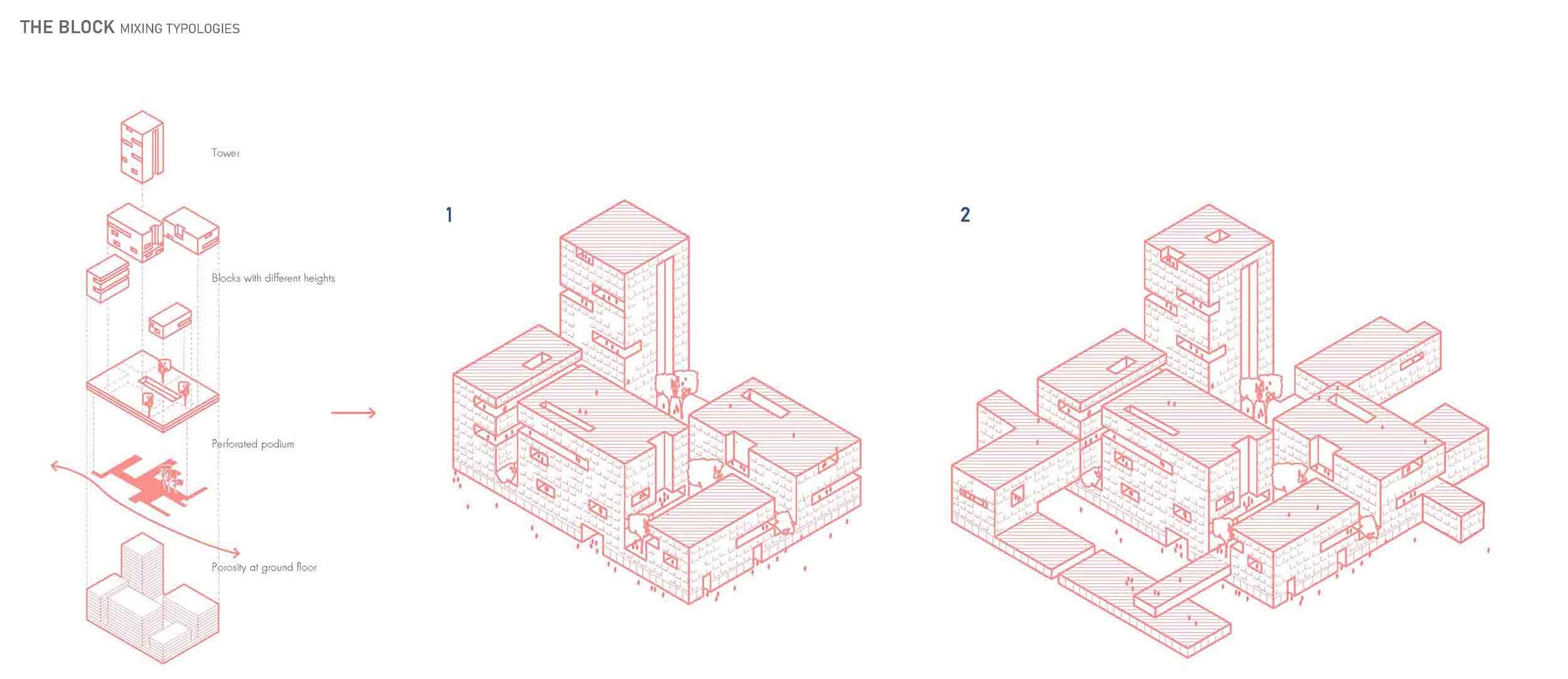
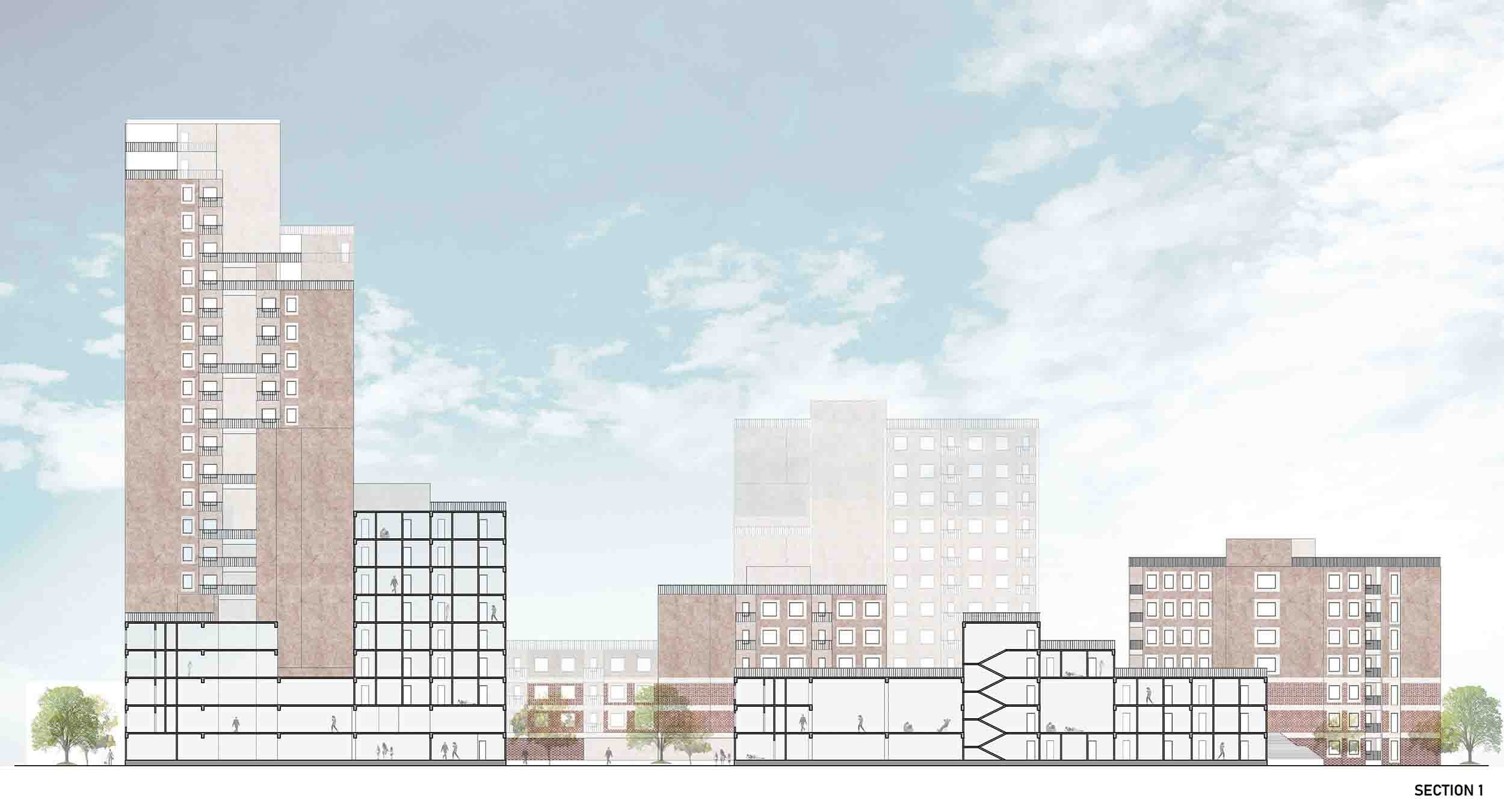
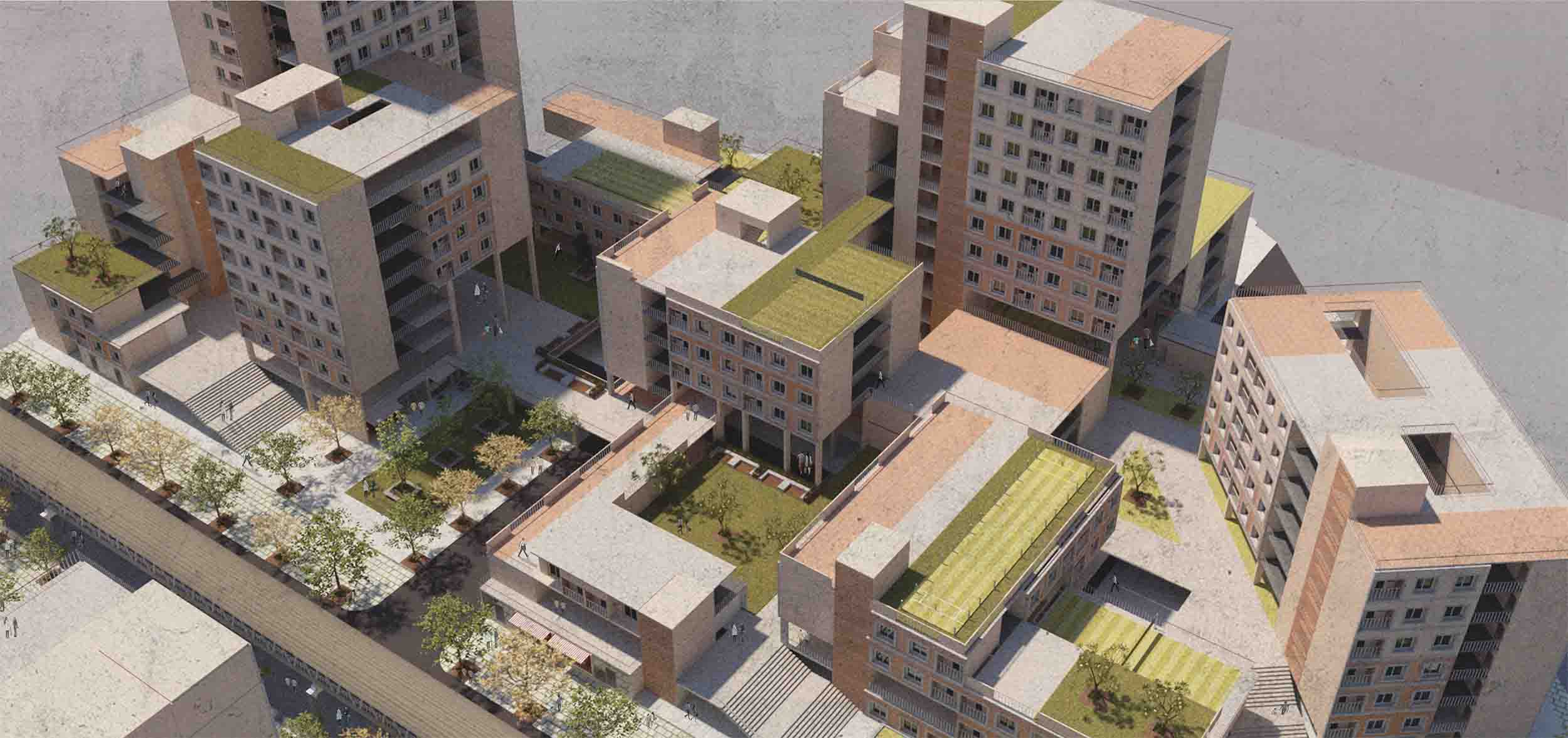
Another approach considers how the simple, rectangular blocks can evolve into more complex geometries that, in turn, create more informal spaces. Whilst following the same conceptual principles, the extension of the buildings into the public realm allows for some of the movement corridors to be incorporated into the buildings. In this instance, the pedestrian flyover can be incorporated as a green yet urban street into the block structure. Similarly, the public spine is composed of several interconnected central spaces that link to the network of streets, which in turn can be incorporated into the irregularly-shaped podiums. The blocks are, whilst of irregular shape, located on the site on a perpendicular axis to form a cohesive masterplan proposal. Both approaches are based on the same typological block principles, whereby a perforated podium with a permeable ground floor is combined with low-medium and high-rise elements that continue the informal arrangement of courtyards and open spaces vertically throughout the building. Whilst requirements such as car parking can be accommodated on the ground floor, it also provides, most importantly, pedestrian routes that open up into courtyards. Buildings of varying heights and shapes are then placed on the podium, of which, wherever suitable, a slim and tall element can create a visual point of reference. Interconnecting voids play an important role as each element of the block is hollowed to create communal open spaces and to allow light into the different blocks.
Our masterplan creates permeable urban spaces, characterised by their public qualities, that facilitate the spontaneous informality of social encounters that allow neighbourhoods to thrive. Within a set of urban principles, our proposals create spaces for people to love and enjoy, responding conceptually as well as in their design to local parameters such as climate, social habits, and movement patterns.
A. PUBLIC STREETS & PLAZAS:
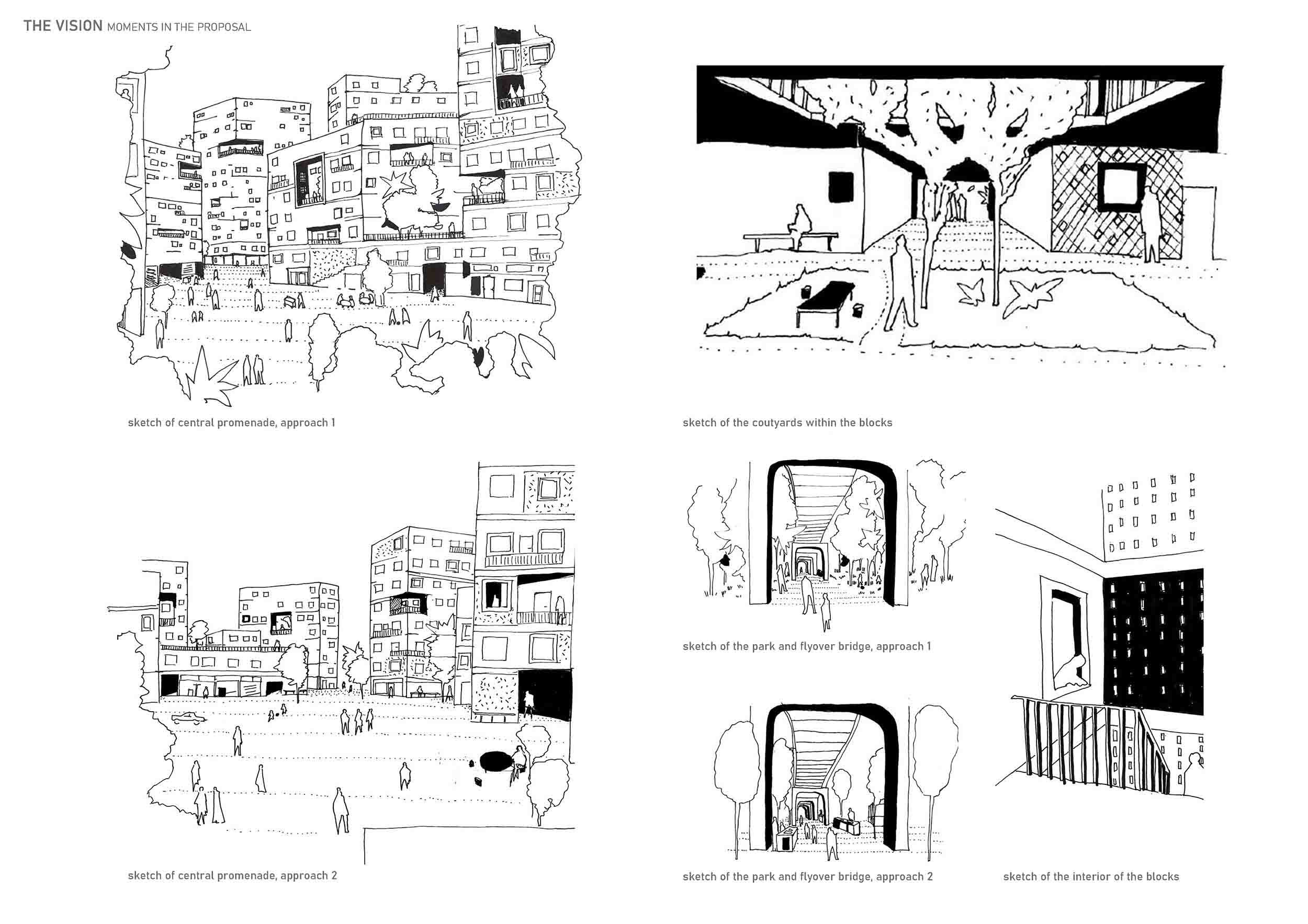
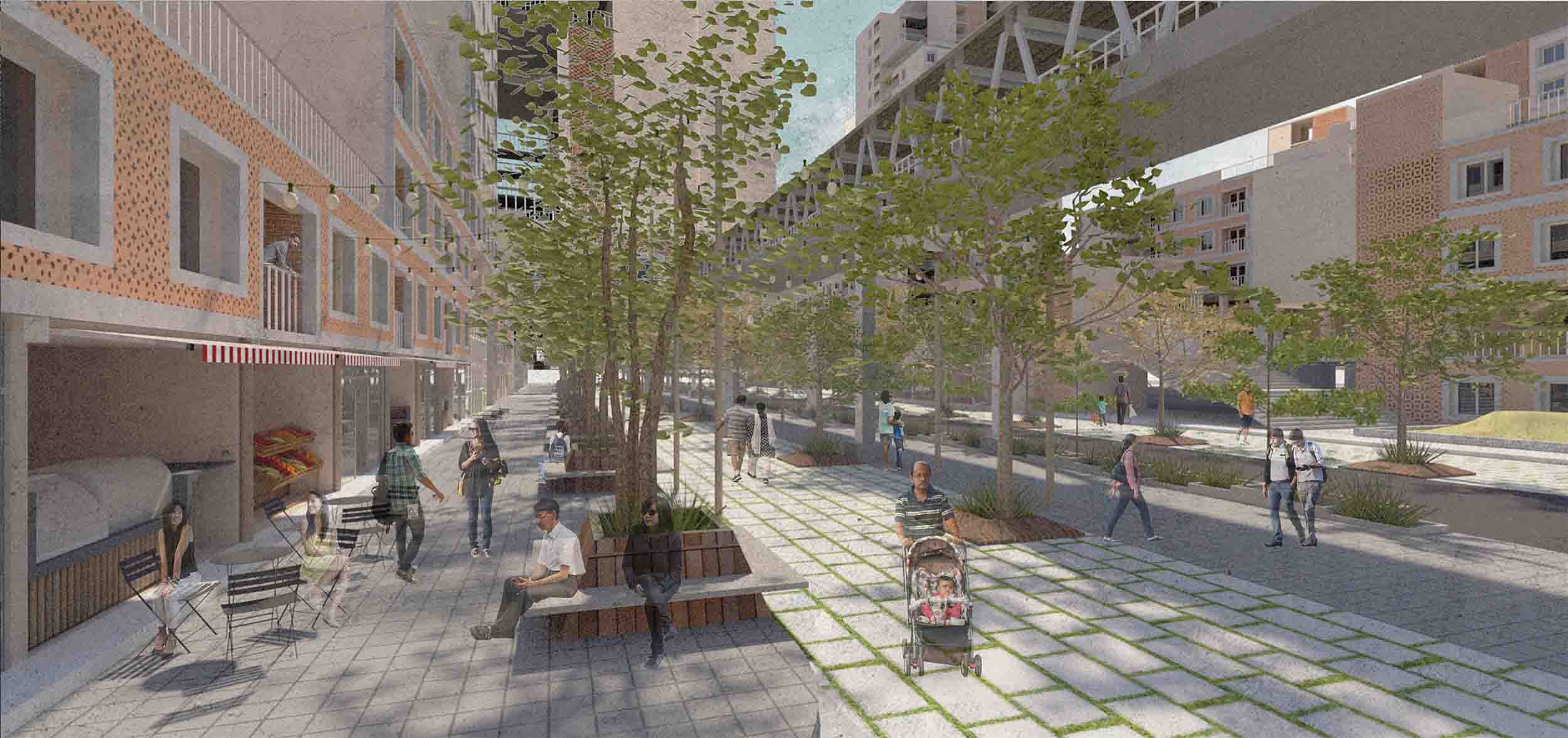
The designed housing complex emphasizes the pedestrian movement at multiple levels. The movement captured by the skywalk cutting across the site, the movement of people at the ground level, and the multi-level podium plazas create a sense of public utility of spaces.
B. PUBLIC TERRACE GARDENS:
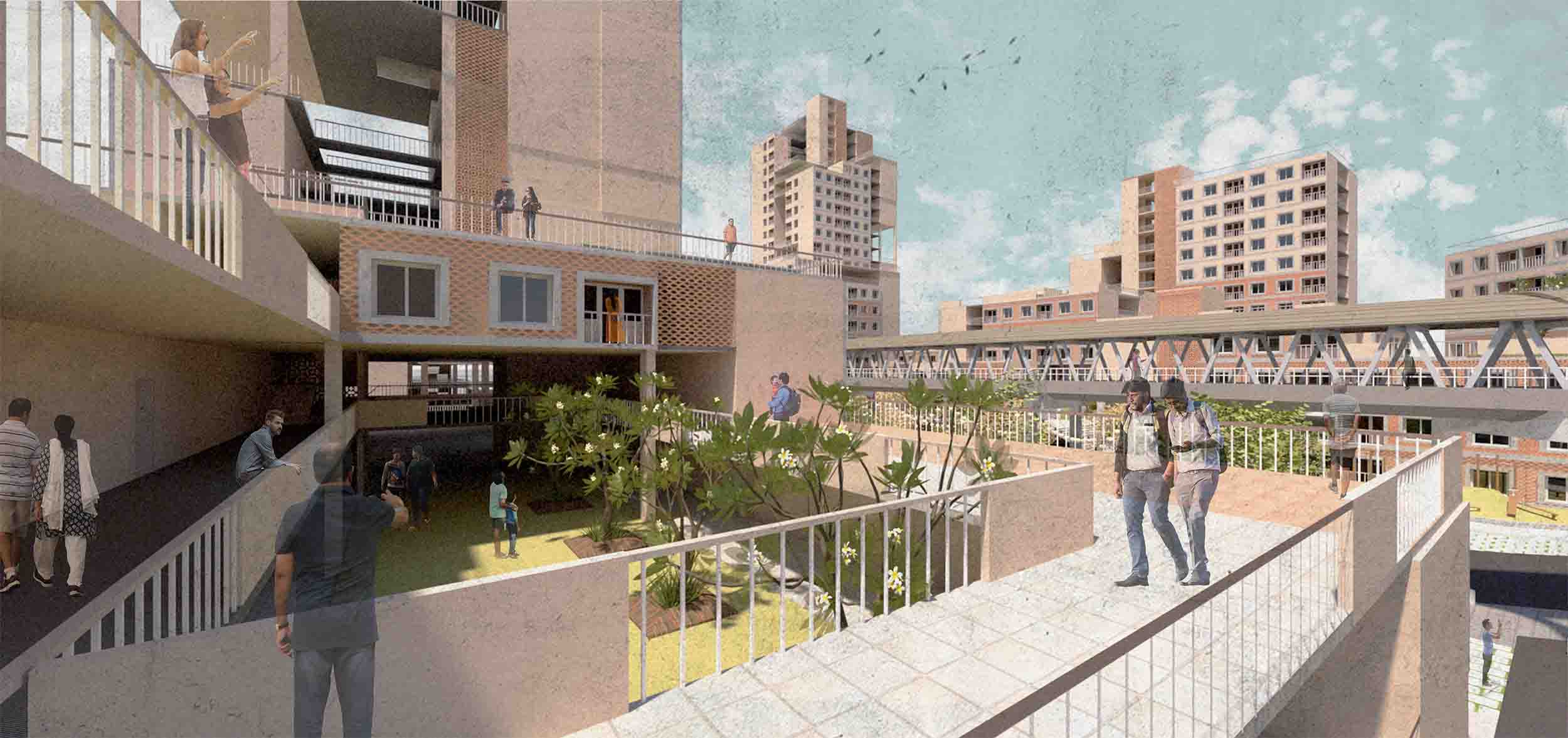
The two scales of platforms for public movement, i.e., street and podium, serve as spaces for small gatherings and informal celebrations.
C. PRIVATE GARDENS TERRACE:
These spaces, located at higher levels within the building, can be utilised for private functions or urban farming activities.
The master plan develops a sense of route of movement for the pedestrians along the in-between podiums, roads, and plazas. The central green spine creates a continuum towards the larger green fields around the site. The vehicular movement is hence restricted at the peripheral roads of the plot.
D.SUSTAINABLE CULTURE
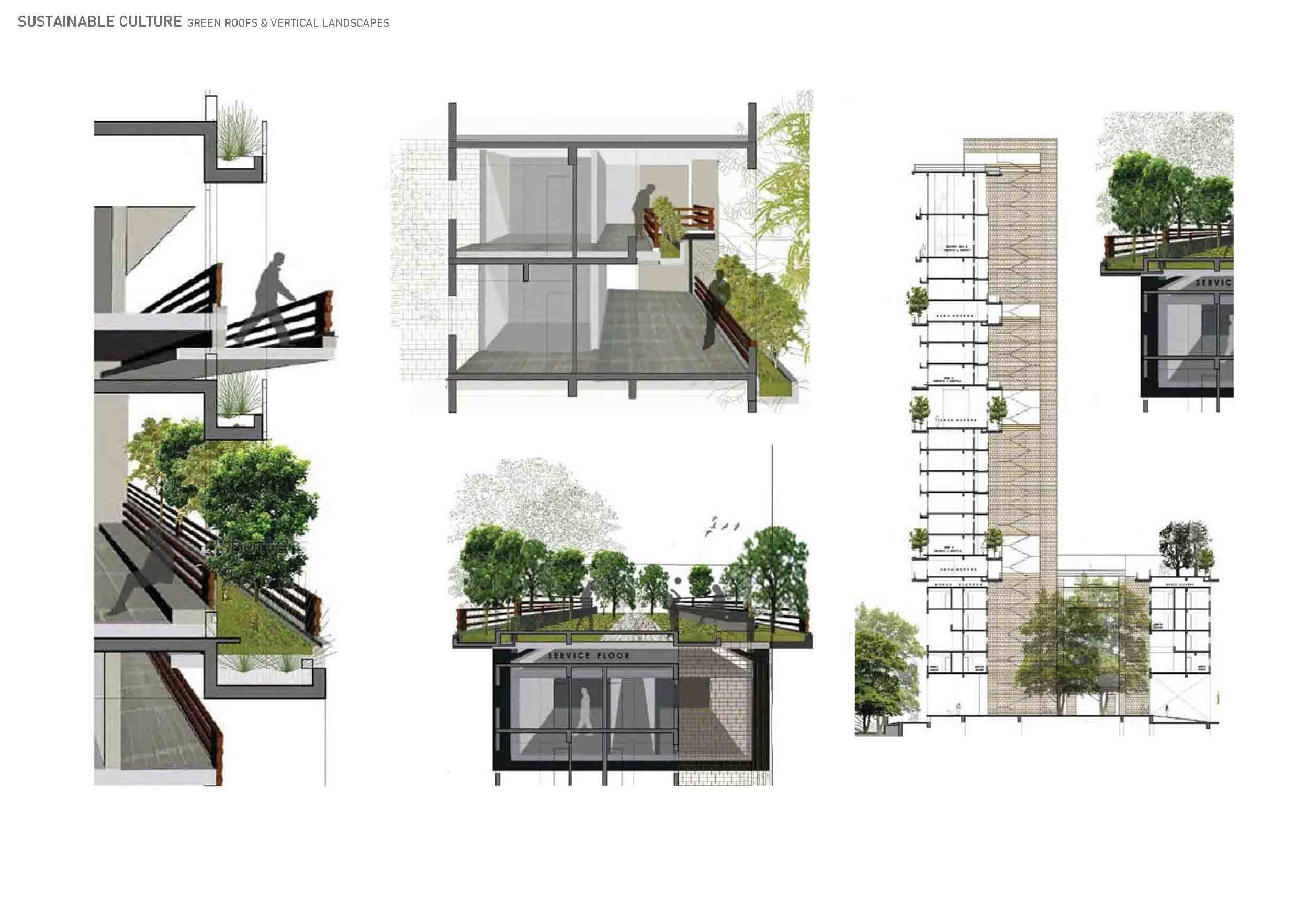
Cultural spaces are set into the ecology of the locality by the outdoor activities, such as amphitheaters and games rooms-close to the public spine, which is a green corridor. This would encourage outdoor activities such as walking, jogging, and cycling in the green corridor and create a socially sustainable neighborhood. Increased green roofs at the Podium level allow for semi-public cultural events, and also help minimize the heat reflection and glare into the buildings. Sky gardens are used as smaller group spaces and also work as extensions of indoor Living. Vertical planting in sky gardens improves the microclimate at the facades of the building by providing additional shade.
The North-south pedestrian movement spine allows for channelizing and funneling south-west winds prevalent in the region. This, in turn, creates cross ventilation across the building blocks that are placed above the podium.
E. GREEN TERRACES
Green roofs form a contiguous natural system within which the building is set. The green roofs and the green walls act as surfaces for wastewater treatment (aeration) and open out at intervals for neighborhood activities. The green walls interspersed within the building perforations in the windward direction help the circulation of cool air. The landscaped terraces minimize heat radiation from the roof surfaces, thereby reducing the urban heat island effect and minimizing heat gain within the structure.
F. VERTICAL LANDSCAPES:
The Landscaped terraces minimize heat radiation from the roof surfaces, minimize heat gain within the structures, and allow for neighborhood activities at the higher levels within the building.
Gallery